Highlands Tequila vs Valley Tequila: Why Do They Taste So Different?
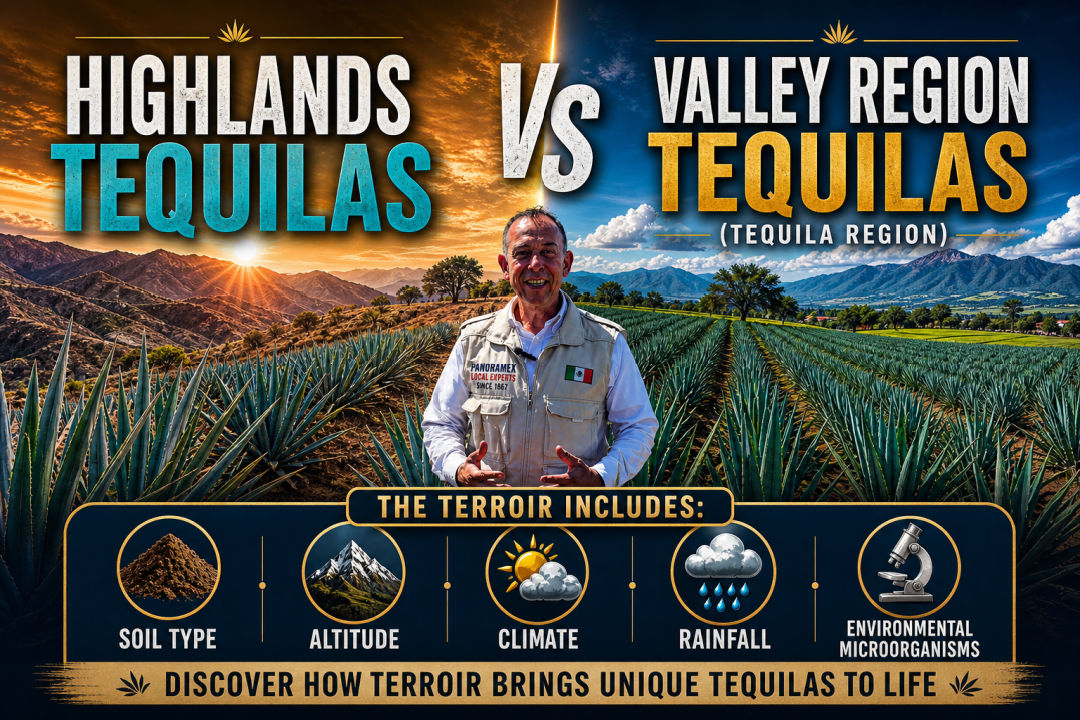
If you’ve ever tasted multiple tequilas in the same afternoon—whether as a curious traveler or a serious agave enthusiast—you’ve probably asked yourself this question: why are some tequilas smooth, sweet, and fruity, while others are bold, herbal, and full of intensity?
The answer isn’t in the bottle. It’s in the land.
More specifically, it comes from two iconic regions in Jalisco, Mexico: the Highlands and the Valley.
Let me explain it to you the way a true tequila expert would—but without overcomplicating it. Just clear examples, a bit of storytelling, and that perspective that makes everything finally click.
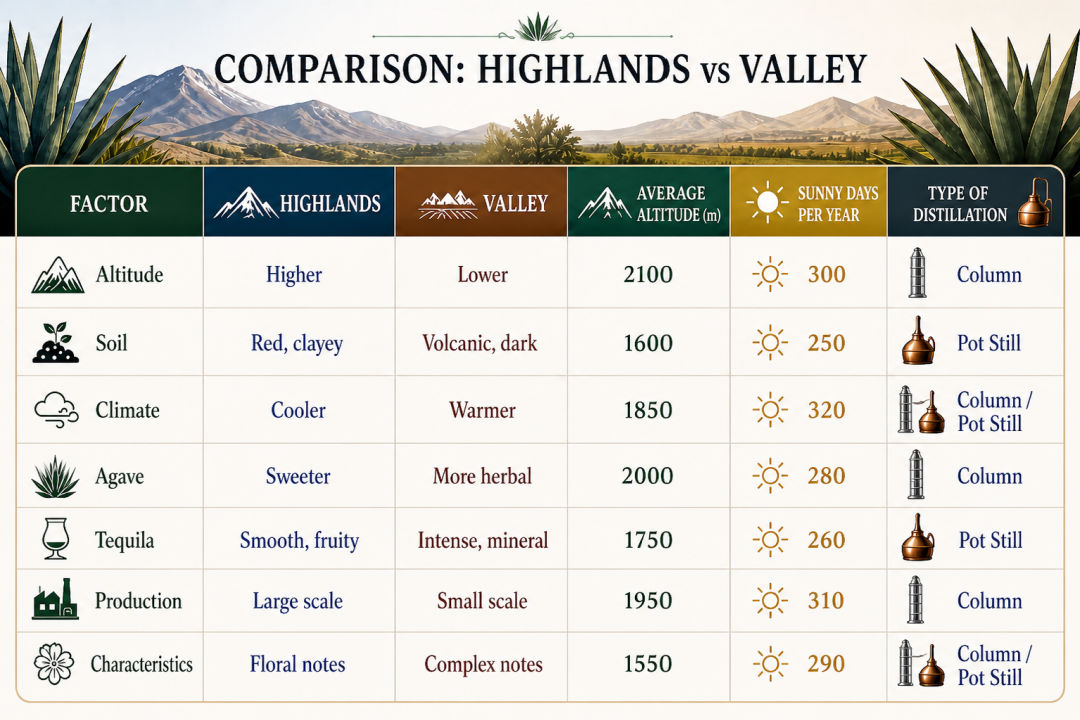
The Highlands of Jalisco are known for sweetness, elegance, and even a touch of romance. This region includes towns like Arandas, Tepatitlán, Ayotlán, and Atotonilco. Everything here happens at a higher elevation. The climate is cooler, and the soil is red and rich in minerals.
The result is a tequila that feels almost designed to win you over.
Tequilas from the Highlands tend to be sweeter, with fruity notes like apple, pear, and citrus. You’ll often find floral aromas and a smooth, round finish that makes them incredibly easy to drink. This is the kind of tequila you can sip slowly, without salt, without lime, and without that harsh reaction many people associate with tequila.
In fact, when someone says they don’t like tequila, there’s a good chance they’ve never tried a true Highlands tequila.
Part of the reason for this profile is time. Agave plants in the Highlands take longer to mature due to the altitude and cooler temperatures. That extra time allows them to develop more natural sugars, and those sugars translate directly into flavor, balance, and complexity.
Highlands Tequila vs Valley Tequila
Now let’s move down into the Valley, where everything changes.
The Tequila Valley includes legendary towns like Tequila, Amatitán, and El Arenal. Here, the soil is darker and volcanic, the climate is warmer, and the conditions are tougher. You can feel that difference immediately when you taste the tequila.
Valley tequilas are typically more herbal, earthy, and intense. You’ll notice notes of pepper, spice, and minerals. They have a stronger presence, a more direct character, and a boldness that doesn’t try to be subtle.
This is tequila with personality. The kind that doesn’t ask for permission. The kind that says, “I’m here,” and makes sure you notice. Take a Tour Tequila to discover this and other secrets first hand.
For many seasoned drinkers, this style feels more traditional, more raw, and in some ways more authentic.
So what’s really behind this dramatic difference?
The key concept is terroir.
It’s a term often used in wine, but it applies perfectly to tequila. Terroir refers to the combination of environmental factors that influence how a plant grows and ultimately how it tastes.
Terroir includes soil type, altitude, climate, rainfall, and even the microorganisms present in the environment. All of these elements affect how the blue agave plant develops, and that directly shapes the final flavor of the tequila.
In simple terms, the flavor of tequila begins in the field, not in the distillery.
So which one is better, the Highlands or the Valley?
This is where it gets interesting. The real answer is that it depends on your personal taste.
If you’re drawn to smoothness, sweetness, and flavors that are easy to enjoy, you’ll likely prefer Highlands tequila. If you enjoy intensity, complexity, and bold, earthy profiles, then Valley tequila is probably your style.
But here’s something most people don’t realize: many tequila producers actually blend agaves from both regions to create a balanced flavor profile. It’s not always one or the other.
And terroir isn’t the only factor at play. The cooking method, whether traditional brick ovens or modern autoclaves, the fermentation process, the distillation technique, and even the type of barrel used for aging can all influence the final product.
Still, the foundation—the DNA of the flavor—always starts in the agave field.
If you really want to understand tequila, you have to experience it where it comes from.
Reading about it is one thing. Standing in the middle of the agave landscape is something completely different.
Watching a jimador harvest the plant, feeling the heat of the land, and tasting tequila right where it’s produced brings everything together in a way that no article ever could.
The Agave Landscape and Ancient Industrial Facilities of Tequila, recognized as a UNESCO World Heritage Site, spans both the Valley and parts of the Highlands. It’s not just a beautiful place—it’s a living, breathing laboratory where tequila is shaped by nature.
When you taste tequila in the Valley, surrounded by volcanic soil, you understand its intensity. When you taste it in the Highlands, rooted in red earth, you understand its elegance.
Here’s an easy way to remember the difference.
Highlands tequila is like a crisp, fruit-forward white wine. It’s smooth, elegant, and easy to fall in love with.
Valley tequila is more like a smoky whiskey. It’s bold, complex, and leaves a lasting impression.
Both are exceptional. They’re just playing in different leagues.
At the end of the day, the difference between Highlands tequila and Valley tequila isn’t a marketing story. It’s science, geography, and centuries of tradition.
The Highlands give you sweetness, elegance, and fruit-forward notes. The Valley gives you intensity, character, and herbal depth.
Once you understand this, something changes. You stop just drinking tequila, and you start appreciating it.
So next time you have a glass in your hand, don’t just ask what brand it is.
Ask where the agave was grown.
Because that’s where the real story begins.
And like we say in Mexico, you don’t rush something worth enjoying. First understand its origin, then take your time and experience it the right way.