Embarking on a tequila tour is an exhilarating and immersive experience that allows you to delve into the rich history, production, and flavors of Mexico’s beloved spirit. With a multitude of tequila tours available, it can be overwhelming to choose the best one. In this article, we will explore some of the best tequila tours that offer unique and unforgettable experiences, ensuring that every tequila enthusiast’s palate is satisfied.
For a more exclusive and personalized experience, opt for a private tequila distillery tour. These tours allow you to visit smaller, boutique distilleries that are not typically included in larger group tours. With a private guide, you’ll have the opportunity to delve deeper into the intricacies of tequila production and savor unique tequila expressions that are not widely available.
2. Agave Field Excursions
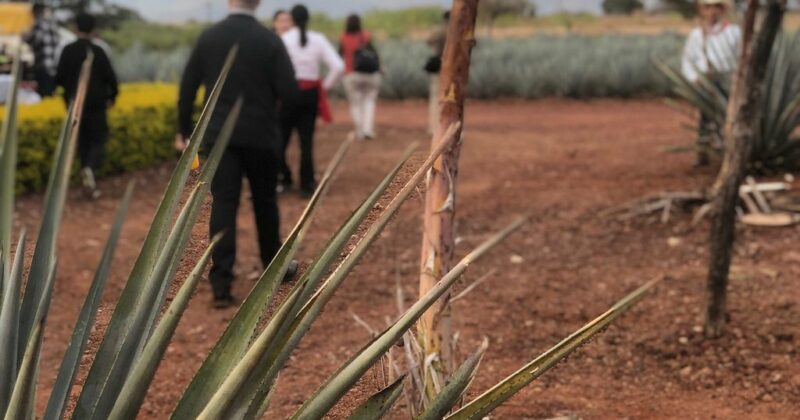
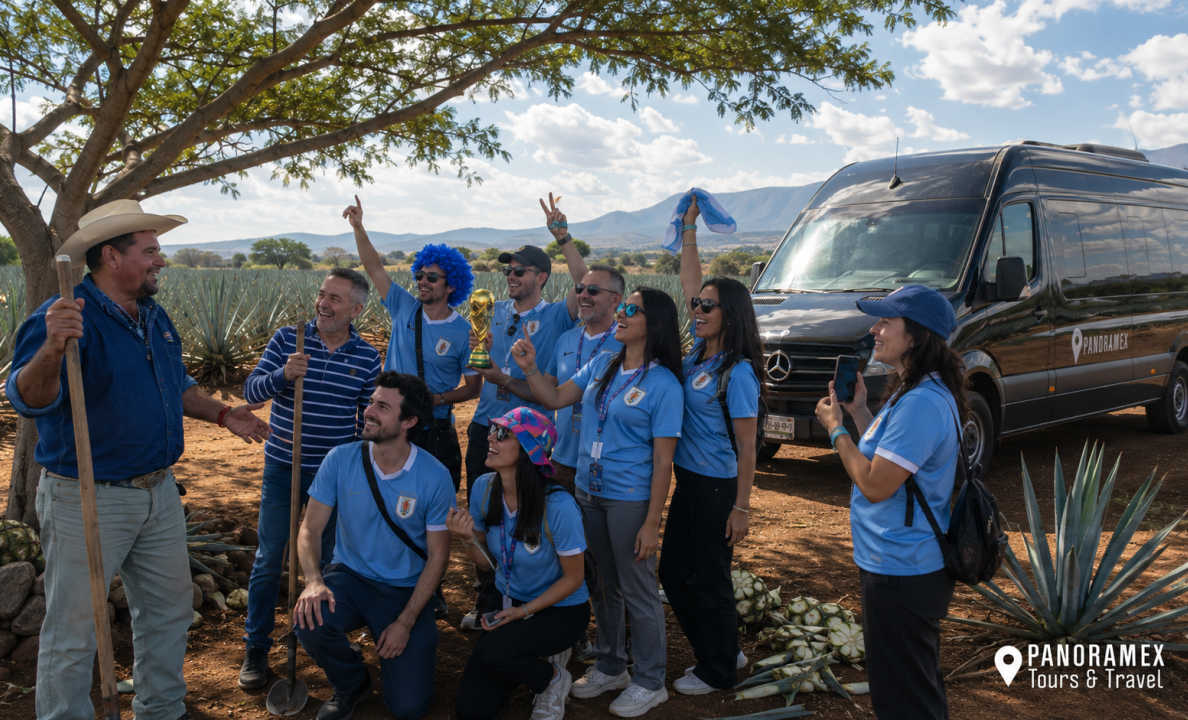
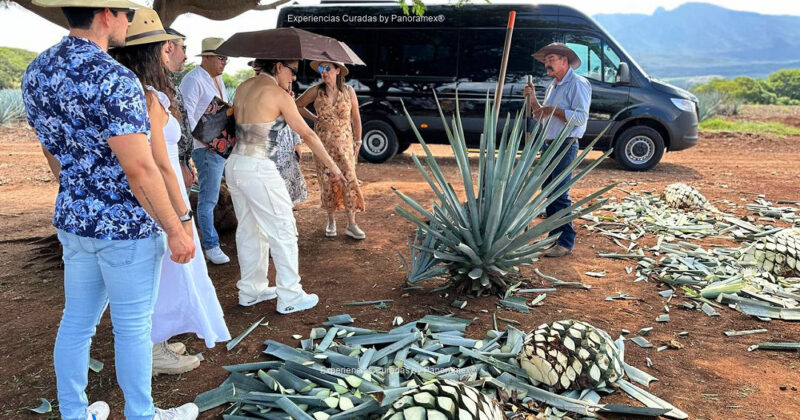
To truly understand the essence of tequila, it’s essential to explore the agave fields where it all begins. Many tequila tours offer excursions to agave farms, allowing you to witness the cultivation and harvesting process firsthand. You’ll gain a deeper appreciation for the agave plant, the heart and soul of tequila production.
3. Tequila Train Experience
Best Tequila Tours in Jalisco Mexico
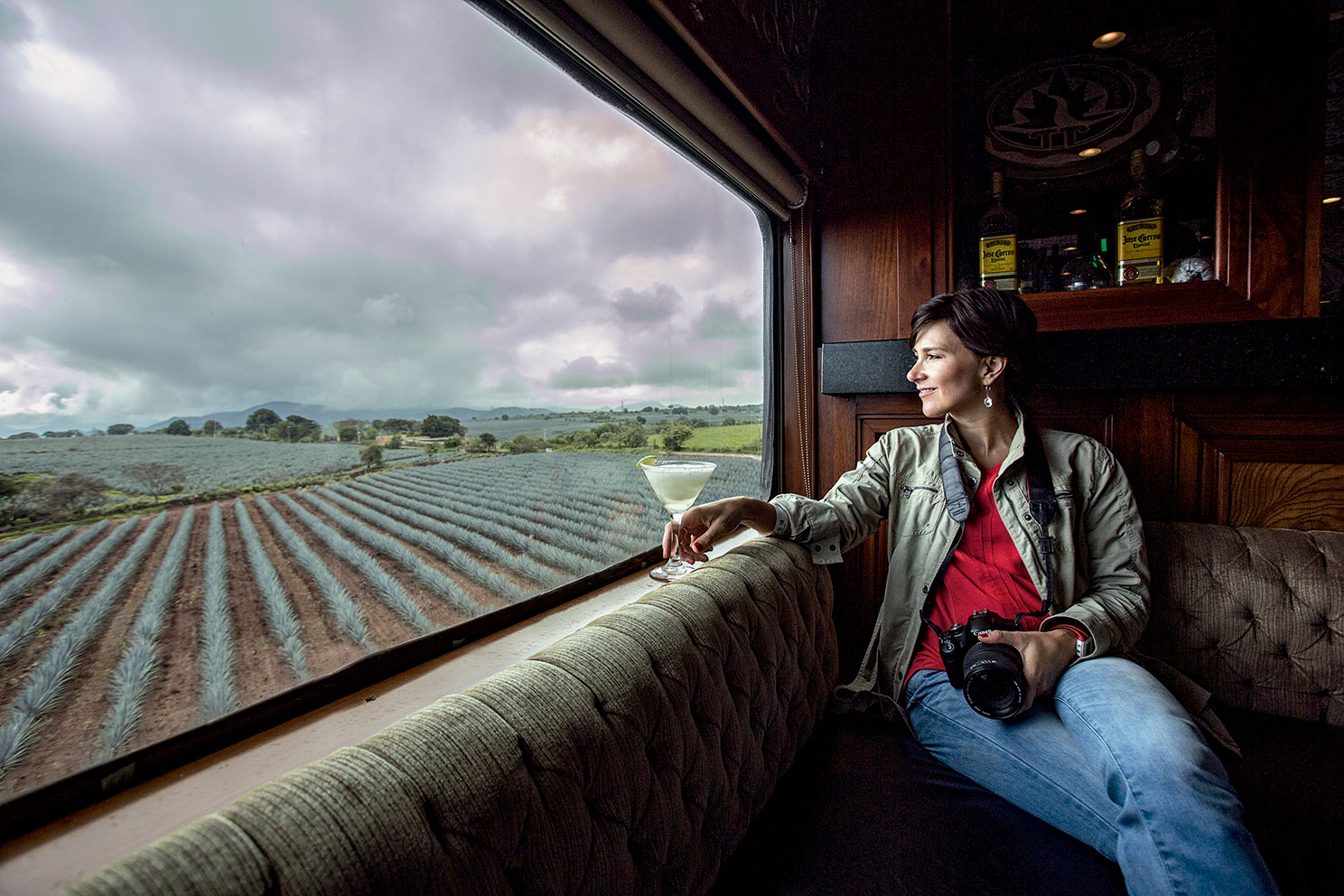
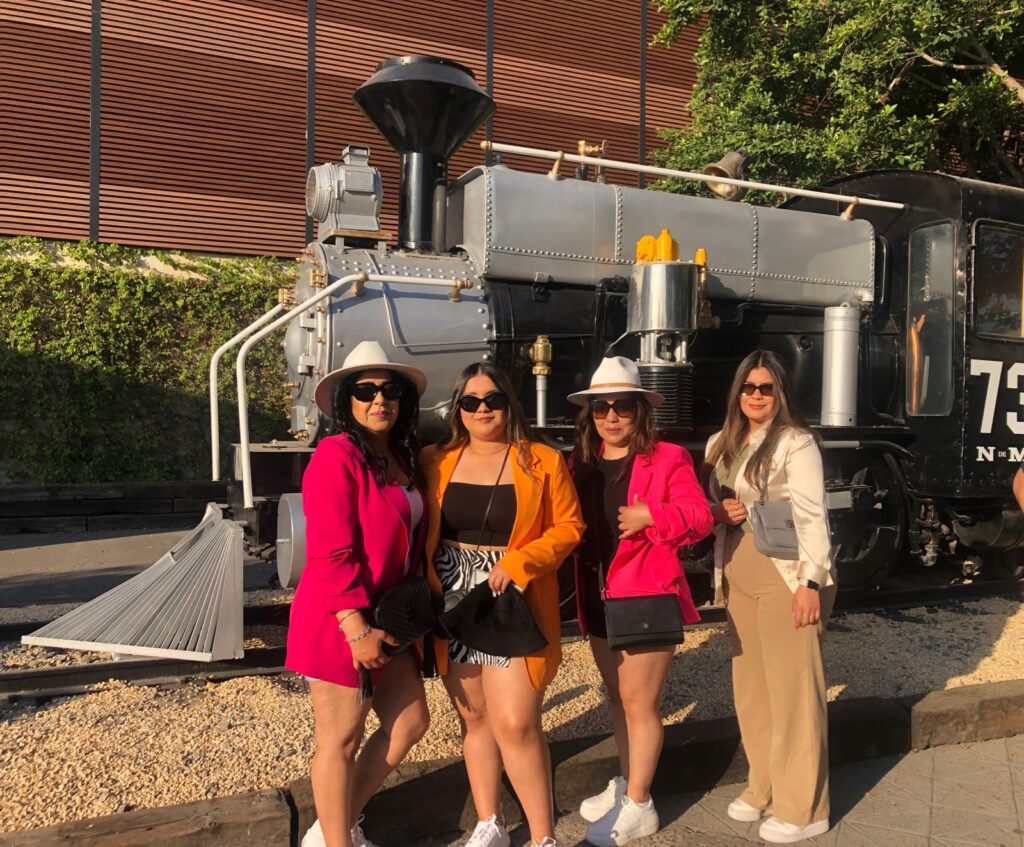
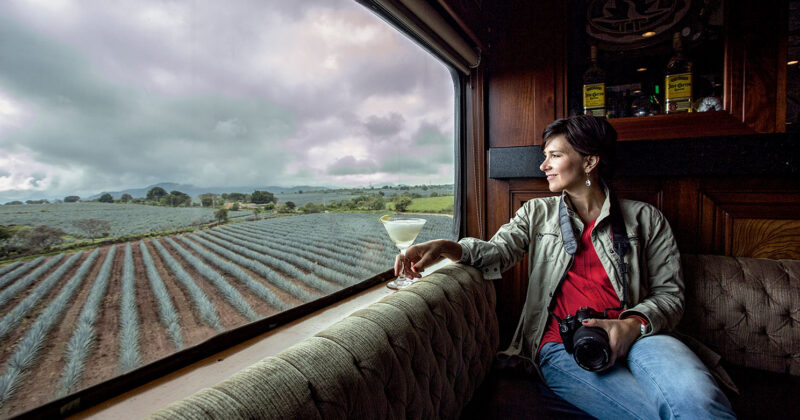
One of the most iconic tequila tours is the Tequila Train Experience. This tour takes you on a scenic train ride through the agave fields of Jalisco, offering breathtaking views of the landscape. Along the way, you’ll visit renowned distilleries, enjoy tequila tastings, and learn about the tequila-making process. The combination of history, culture, and stunning views makes this tour a must for any tequila aficionado.
4. Mixology Workshops
Tequila is not only meant to be sipped but also celebrated in creative cocktails. Consider a tequila tour that includes mixology workshops, where you’ll learn how to craft signature tequila-based drinks under the guidance of skilled mixologists. Unleash your creativity and explore the endless possibilities of tequila mixology.
5. Culinary Experiences
Best Tequila Tours
Tequila and Mexican cuisine go hand in hand, and many tequila tours offer culinary experiences that pair the spirit with delectable dishes. From traditional food tastings to cooking classes, these tours allow you to indulge in the gastronomic delights of Mexico while discovering the perfect tequila pairings.
6. Tequila Tastings
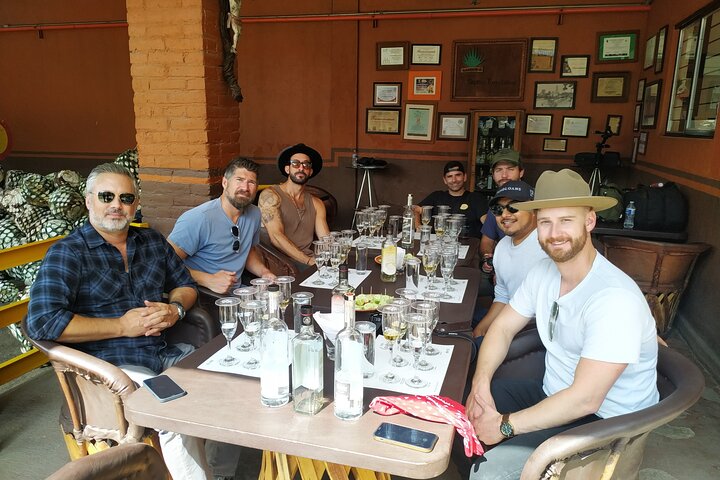
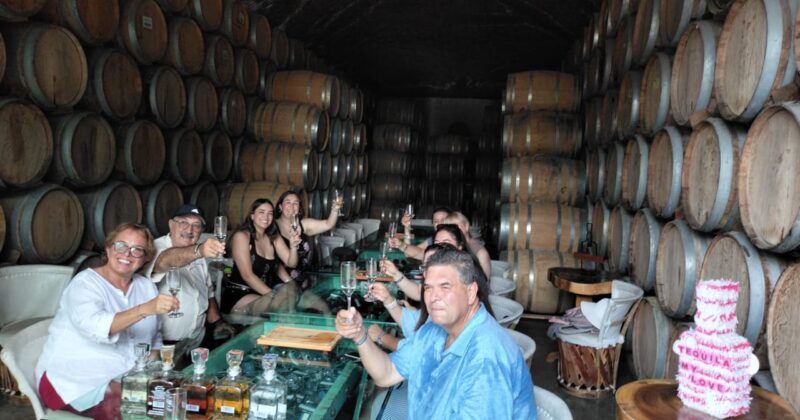
No tequila tour is complete without indulging in a variety of tequila tastings. Look for tours that offer a diverse range of tequila expressions, from blanco to reposado and añejo. Expert guides will take you through the nuances of each tequila, helping you develop a discerning palate and a deeper appreciation for the art of tequila tasting.
Private_Tequila Tasting Tour
7. Cultural Immersion
Tequila is deeply intertwined with Mexican culture, and the best tequila tours provide opportunities for cultural immersion. Explore the vibrant towns and villages where tequila production thrives, visit local artisans, and learn about the traditions and customs that have shaped tequila’s identity.
8. Historical Tours
To fully grasp the significance of tequila, consider a historical tour that takes you through the landmarks and sites that played a pivotal role in tequila’s evolution. From ancient agave distillation sites to historical haciendas, these tours provide a glimpse into the past and a deeper understanding of tequila’s cultural heritage.
9. Educational Workshops
Expand your knowledge of tequila by participating in educational workshops led by industry experts. These workshops cover a range of topics, from the science of tequila production to the art of barrel aging. You’ll gain insider knowledge and a deeper appreciation for the craftsmanship behind every bottle of tequila.
10. Sunset Tequila Tastings
For a truly enchanting experience, consider a sunset tequila tasting. Picture yourself sipping tequila as the sun dips below the horizon, casting a warm glow over the agave fields. This magical setting creates a memorable ambiance that enhances the flavors and adds a touch of romance to your tequila tour.
Best Tequila Tours
The best tequila tours offer an extraordinary journey into the world of tequila, combining history, culture, flavors, and experiences that cater to every tequila enthusiast’s preferences. Whether you choose to ride the Tequila Train, explore private distilleries, or immerse yourself in agave fields, each tour promises to leave you with a deeper appreciation for tequila and the rich heritage it represents. So, raise your glass and embark on a tequila tour that will ignite your senses and leave you with lifelong memories.
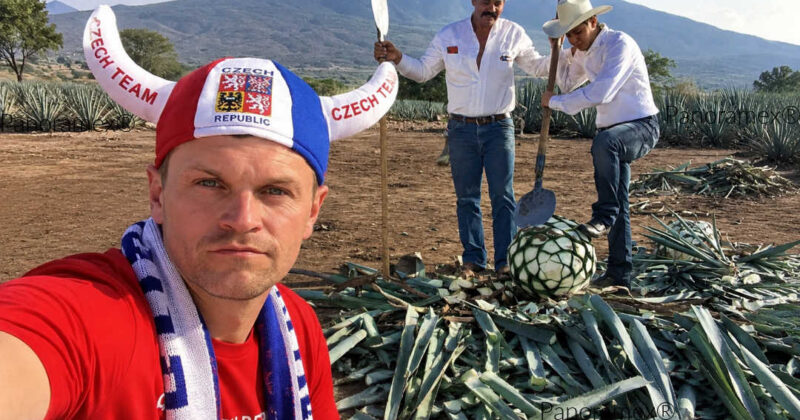
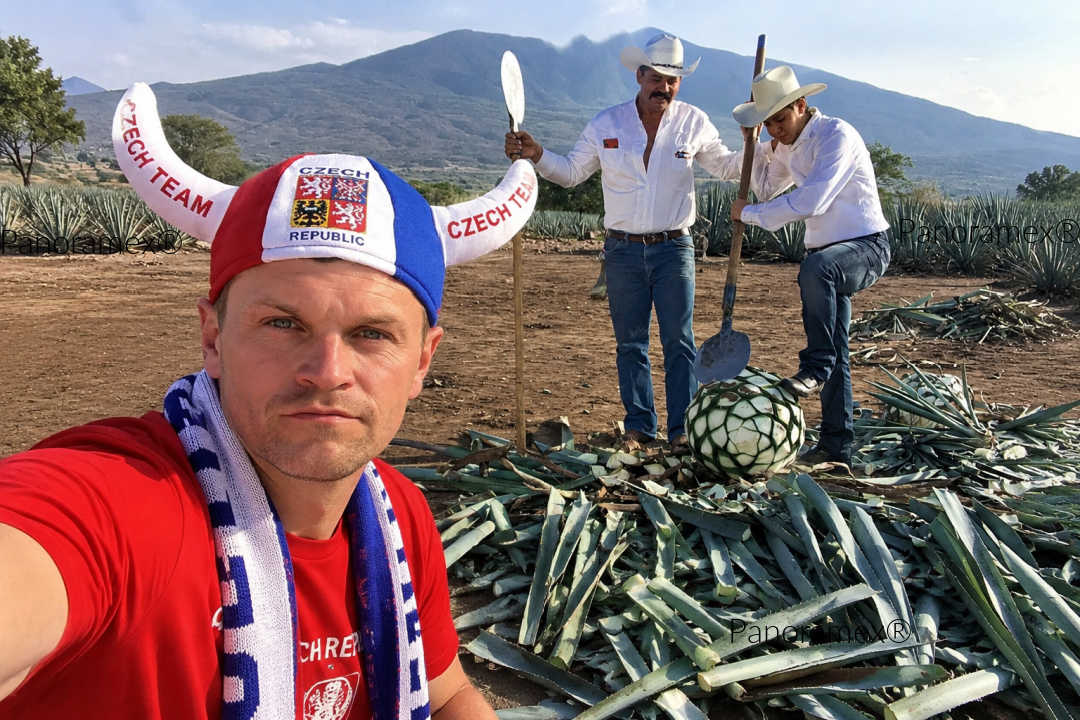
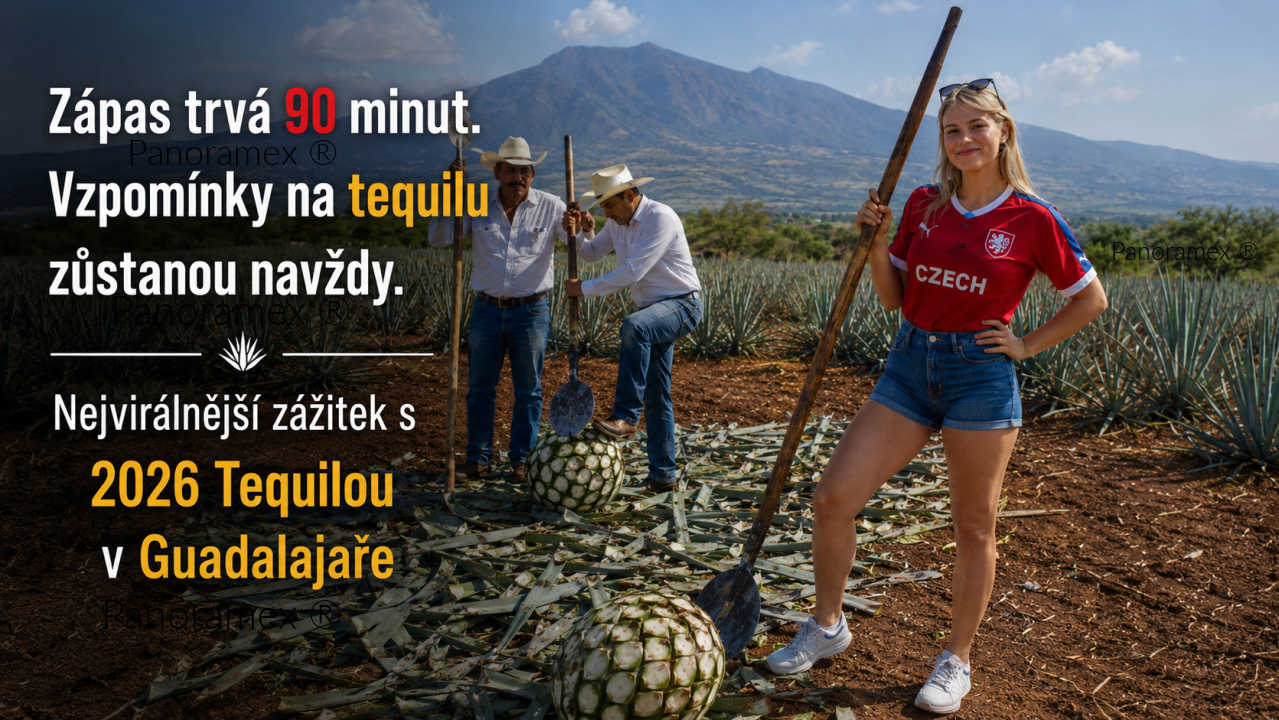
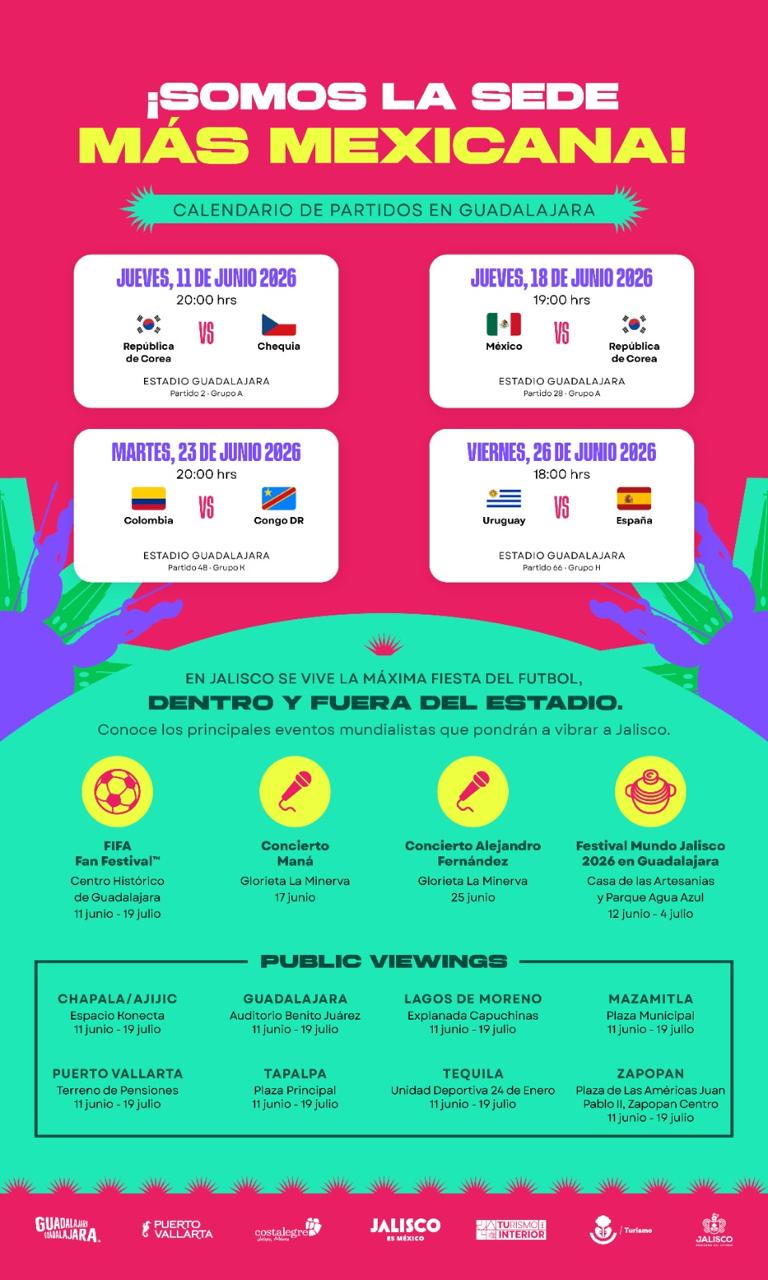
Is Tequila worth visiting after CZECHIA VS KOREA 2026 in Guadalajara Stadium
Is Tequila Worth Visiting for Football Soccer Matches?
The Unexpected Fan Experience Near Guadalajara
For many international football fans traveling to Guadalajara, the original plan is simple:
Watch the match. Celebrate. Move on to the next city.
But thousands of visitors are beginning to discover something unexpected just outside Guadalajara — a destination that transforms a football trip into a much bigger Mexican experience.
This transforms tequila into a cultural experience rather than just a party drink.
Many visitors leave with a completely different appreciation for Mexico.
When most travelers hear the word Tequila, they immediately think of shots, parties, and late nights. But visiting Tequila is something completely different.
This small town in the state of Jalisco is one of the most fascinating cultural destinations in Mexico — a place where volcanic soil, blue agave fields, centuries-old distilleries, mariachi traditions, and authentic Mexican hospitality all come together in a way that few places on earth can offer.
So… is Tequila worth visiting?
Absolutely. But not for the reasons most people expect.
Tequila Is Much More Than a Drink
The town of Tequila is the birthplace of tequila itself. This is where Mexico’s most iconic spirit was born, refined, and eventually protected under Denomination of Origin laws.
But what surprises many visitors is that Tequila is not simply a “party town.” In reality, it is a destination filled with history, tradition, craftsmanship, architecture, landscapes, and deeply rooted culture.
Walking through Tequila feels like stepping into the heart of traditional Mexico:
Cobblestone streets
Colorful plazas
Historic haciendas
Agave-covered mountains
Church bells echoing through town
The aroma of cooked agave floating from nearby distilleries
It is one of the few places where industrial heritage and rural beauty coexist so naturally.
The Agave Landscape Is a UNESCO World Heritage Site
One of the biggest reasons Tequila is worth visiting is the breathtaking agave landscape surrounding the town.
In 2006, the “Agave Landscape and Ancient Industrial Facilities of Tequila” became a UNESCO World Heritage Site. This recognition elevated the region into one of the most culturally important destinations in Latin America.
The endless rows of blue agave fields create scenery unlike anywhere else in the world.
Depending on the season, the agaves change color dramatically:
Deep blue-green during rainy months
Silver tones at sunrise
Golden reflections during sunset
Many travelers say the landscapes feel cinematic, peaceful, and unexpectedly emotional.
Visiting Distilleries Is an Entire Cultural Experience
Most people assume tequila distillery tours are just tastings.
They are not.
A true tequila experience involves learning:
How agave is cultivated for years before harvest
The role of the jimador (agave farmer)
Traditional ovens and fermentation methods
Differences between artisanal and industrial production
Aging processes inside barrel cellars
Flavor profiles shaped by terroir and altitude
In Tequila, tasting tequila becomes similar to wine tasting in regions like Tuscany or Napa Valley.
Some distilleries are massive historic estates, while others are intimate family-run operations hidden among the agave fields.
Popular experiences include:
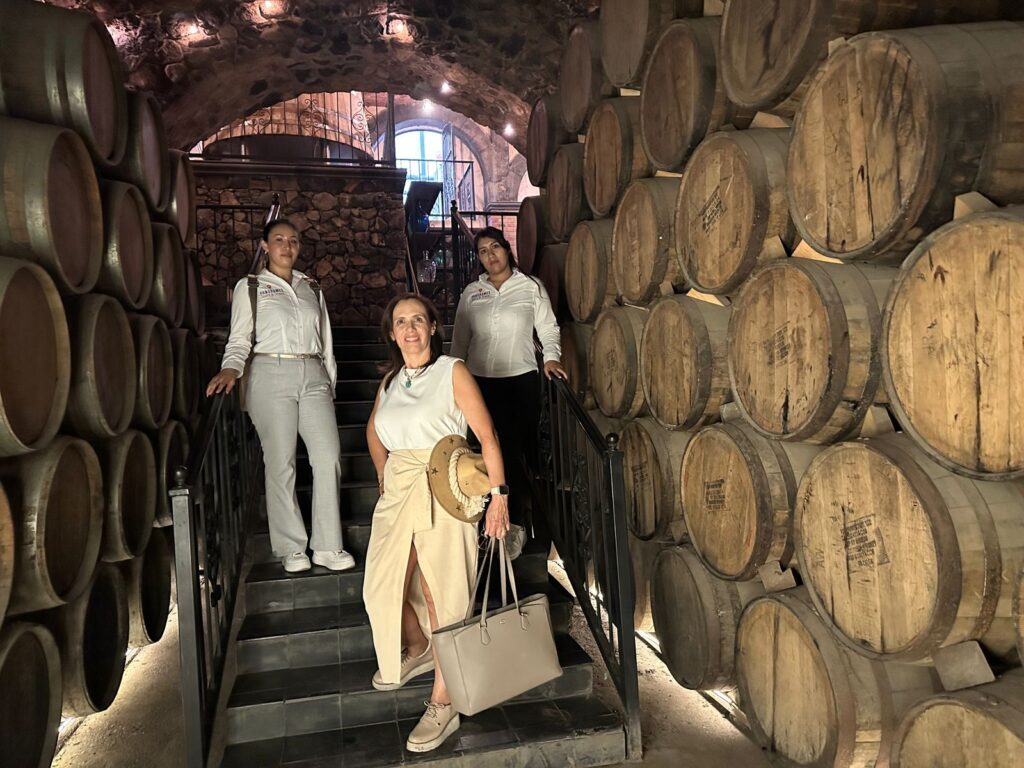
Walking through underground aging caves
Tasting tequila directly from barrels
Pairing tequila with Mexican cuisine
Riding through the agave landscape
Learning the history behind legendary tequila houses
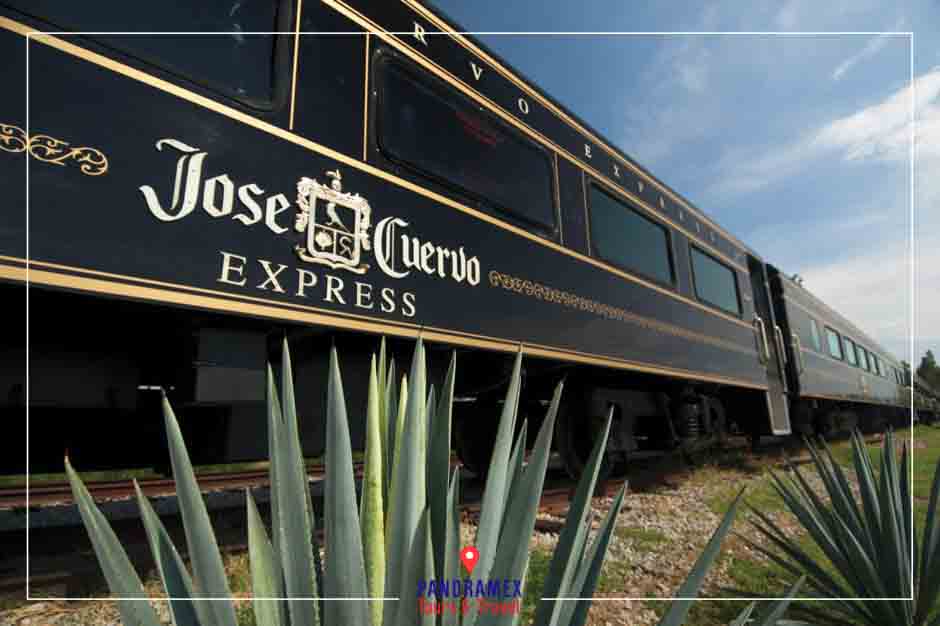
The Jose Cuervo Express Train Alone Is Worth the Trip
One of the most iconic experiences in Mexico is riding the Jose Cuervo Express.
This luxury-style train travels between Guadalajara and Tequila through the agave landscape.
The experience often includes:
Premium tequila tastings
Mexican cocktails
Live mariachi music
Cultural performances
Agave field demonstrations
Gourmet food experiences
For many international visitors, it becomes the highlight of their trip to Mexico.
Tren Jose Cuervo Express Is it worthed taking the Tequila Train from Guadalajara in 2026
Tequila Has Become One of Mexico’s Most Instagrammable Destinations
Tequila is visually stunning.
Everywhere you look feels photo-worthy:
Giant agave landscapes
Historic tequila haciendas
Vibrant murals
Rustic bars
Colorful cantinas
Horseback riders
Mariachi performances
Sunset rooftop views
The town blends luxury tourism with authentic rural Mexico in a way that feels genuine rather than artificial.
That balance is rare.
The Food Scene Is Better Than Most Visitors Expect
Another surprise for travelers is how good the food is in Tequila.
Traditional Jalisco cuisine is rich, flavorful, and deeply connected to the region’s agricultural traditions.
Visitors can enjoy:
Birria
Carne en su jugo
Tortas ahogadas
Handmade tortillas
Tequila-infused sauces
Raicilla and tequila pairings
Craft cocktails with local ingredients
Many rooftop restaurants now combine modern Mexican gastronomy with panoramic agave valley views.
Is Tequila Safe for Tourists?
This is one of the most common questions travelers ask.
Like many tourism destinations worldwide, safety depends heavily on:
Using reputable transportation
Booking organized tours
Avoiding isolated areas late at night
Traveling responsibly
The main tourist areas of Tequila are generally focused on tourism and hospitality, especially during the daytime and weekends when visitors arrive from around the world.
Many travelers choose guided experiences departing from Guadalajara because they simplify logistics and help visitors maximize their time safely and comfortably.
How Much Time Do You Need in Tequila?
Many visitors wonder whether Tequila is just a day trip.
The answer depends on the type of traveler you are.
A Day Trip Is Great If You Want:
A quick tequila experience
Distillery tours
Agave field photos
Tastings and sightseeing
Stay Overnight If You Want:
Sunset rooftop experiences
Nighttime mariachi atmosphere
Boutique hotels
Slower luxury experiences
Deeper cultural immersion
An overnight stay allows visitors to experience Tequila after the day-tour crowds leave — which many travelers consider the town’s most magical moment.
Tequila Is About Emotion, Not Just Tourism
The reason Tequila leaves such a strong impression on visitors is because it feels authentic.
Unlike destinations designed purely for tourism, Tequila still feels connected to its agricultural roots and Mexican identity.
You do not simply “see” Tequila.
You smell cooked agave in the air. You hear mariachi music in the plazas. You watch jimadores working under the sun. You taste traditions that have existed for generations.
That emotional connection is what transforms Tequila from a tourist stop into a memorable experience.
Final Verdict: Is Tequila Worth Visiting During Football Matches?
Absolutely.
If you are traveling to Guadalajara for football and want:
Authentic Mexican culture
Incredible landscapes
Unique celebrations
Luxury experiences
Social atmosphere
Gastronomy
Tequila tastings
Instagram-worthy moments
then visiting Tequila is one of the best decisions you can make during your trip.
Because in Mexico, football is not only watched.
It is celebrated.
And there may be no better place to celebrate than in the heart of tequila country.
Soccer 2026 in Tequila Public Viewing at Unidad Deportiva: Where soccer blends with mariachi, tequila, and Mexican tradition.
While the entire world turns its eyes toward Guadalajara during the great international soccer tournament of 2026, there is a destination less than an hour from the city that promises to become one of the most authentic, exciting, and unforgettable experiences for international fans:
Public Viewing succer in Tequila Jalisco Futbol 2026
Meet in Tequila from June 11 to July 19 at Unidad Deportiva 24 de Enero.
Because there are cities where people simply watch the matches…
And there are destinations where soccer is lived with the soul.
Magical Town Where Mexico Celebrates Differently
During the summer of 2026, Tequila will not only be a Magical Town.
A place where fans from different countries can gather in front of giant screens surrounded by agave fields, Mexican music, Jalisco gastronomy, and an atmosphere unlike anywhere else in the world.
Soccer 2026 in Tequila Public Viewing
Imagine it for a moment:
The sun setting over the agave landscape.
Live mariachi music playing.
The aroma of cooked agave floating through the air.
Freshly prepared cantaritos.
And hundreds of fans celebrating a goal together while discovering the most authentic essence of Mexico.
That is exactly what could make the Tequila Fan Festival one of the most memorable experiences of 2026.
Watching Soccer in the Land of Tequila
Few experiences will carry as much emotional power for international visitors as watching an international match in the land where tequila was born.
Uruguay VS España en Guadalajara 2026 Futbol
Because here, the atmosphere changes completely.
It is not just about watching a broadcast.
It is about living a cultural celebration.
Public plazas, rooftops, gardens, and tourist spaces could transform into massive gathering zones where soccer blends with:
Regional Mexican music • Live mariachi performances • Traditional Jalisco cuisine • Cultural activations • Art and folklore • Tequila experiences • International themed celebrations
All surrounded by the agave landscape recognized by UNESCO as a World Heritage Site.
Giant Screens Between Agave Fields and Haciendas
For weeks, Tequila could become one of the most photographed destinations in Jalisco.
The visual combination is simply powerful:
Giant screens.
International flags.
Colonial streets.
Illuminated tequila haciendas.
Fans from all over the world celebrating together.
And the breathtaking agave landscape surrounding the entire experience.
For many international visitors, this will be exactly what they imagined when dreaming about visiting Mexico:
Is It Worth Visiting Tequila on a Tour or on Your Own? The Truth No One Tells You
Is it worth visiting Tequila on your own or on a Tour
There’s a question almost every traveler asks before visiting Tequila—even if they don’t say it out loud: Should I go on my own, or book a tour?
Most articles will give you a safe, generic answer: “both options are good.” But that kind of advice doesn’t actually help you make a decision. The truth is more nuanced—and far more important if you want to make the most of your time in Mexico’s most iconic spirit destination.
Because Tequila is not just a town. It’s an ecosystem of experiences built around one of the most culturally significant products in Mexico. And depending on how you visit, your experience can feel either unforgettable… or surprisingly underwhelming.
Let’s break it down honestly.
The Idea of Doing Tequila on Your Own
On paper, visiting Tequila independently sounds like the perfect plan. You control your schedule, you pick your stops, and you travel at your own pace. It’s especially appealing if you consider yourself a seasoned traveler.
From Guadalajara, getting to Tequila is relatively straightforward. You can rent a car, take an Uber, or even try public transportation. The distance isn’t huge—about 65 kilometers (40 miles)—and the drive takes roughly 1.5 to 2 hours depending on traffic.
So far, so good.
But here’s where things start to get complicated.
If you decide to drive, you immediately limit one of the core reasons for visiting Tequila in the first place: tasting freely. Tequila tastings are not optional—they are the experience. And once you’re behind the wheel, that freedom disappears.
Uber seems like a better option, but availability in Tequila—especially for the return trip—is inconsistent. Many travelers don’t realize this until late afternoon, when they’re ready to head back and suddenly find themselves negotiating prices with local drivers or waiting far longer than expected.
Then comes the issue of access.
Not all distilleries operate like open museums. Some of the most interesting ones require reservations, have limited schedules, or restrict entry altogether without prior arrangement. Larger operations like Casa Cuervo offer structured tours, but smaller, more artisanal distilleries are less predictable.
Arriving without a plan often means settling for whatever is available rather than what is truly worth your time.
And that leads to one of the biggest misconceptions: that Tequila is just about the town itself.
Yes, the historic center is charming. You’ll find colorful streets, restaurants, souvenir shops, and the famous “Tequila” sign where everyone takes photos. But if that’s all you experience, you’re only scratching the surface.
The real value lies beyond the plaza—in the distilleries, in the agave fields, and in understanding the process behind the spirit.
Without structure, many independent travelers spend a surprising amount of time figuring things out: where to go next, how to get there, what’s worth seeing, and what’s not. That friction eats into your day and often leaves you with a fragmented experience.
What a Tour Actually Changes
Now let’s talk about tours—but not all tours are created equal.
A well-designed tour doesn’t just take you from point A to point B. It removes friction, organizes access, and transforms your visit into a cohesive experience.
From the moment you leave Guadalajara, everything is coordinated: transportation, distillery visits, timing, and storytelling. You’re not making decisions on the fly—you’re moving through a curated journey.
The first and most obvious benefit is convenience. You don’t have to worry about driving, navigation, parking, or availability. You can focus entirely on enjoying the experience, including tastings, without limitations.
A strong tour itinerary often includes a combination of distillery types—large, historic producers and smaller, artisanal operations. For example, you might visit a structured facility like Casa Cuervo and then contrast it with a more traditional producer such as Tequila Fortaleza, where the process feels more intimate and hands-on.
This contrast is essential if you want to understand tequila beyond the surface level.
And that brings us to another key difference: interpretation.
Tequila is not just a drink—it’s the result of geography, agriculture, chemistry, and tradition. The flavor profile of tequila varies significantly depending on where and how it’s produced.
For instance, agave grown in Los Altos de Jalisco tends to produce sweeter, fruitier tequilas due to higher altitude and red clay soils. In contrast, the Valle de Tequila, with its volcanic soil and lower elevation, often yields more herbal, mineral-forward profiles.
Without someone explaining these differences, most visitors taste tequila without truly understanding it. With the right guide, that same tasting becomes a moment of insight.
A good guide doesn’t just share facts—they connect the dots. They turn production steps into stories, and tastings into meaningful experiences. That’s what elevates a visit from enjoyable to memorable.
The Hidden Factors Most People Overlook
There are a few elements that rarely make it into travel guides, but they matter.
Time efficiency is one of them. A typical day trip to Tequila is limited. Between travel time and return logistics, you have a finite window to explore. Without planning, it’s easy to waste hours on decisions and transitions.
A well-structured tour compresses that inefficiency. You see more, learn more, and experience more—without feeling rushed.
Consistency is another factor. When you travel independently, your experience depends heavily on timing, availability, and luck. On a tour, the experience is designed to deliver a consistent level of quality.
And then there’s safety and comfort. While the Tequila region is one of the most visited and regulated tourist corridors in Jalisco, navigating unfamiliar areas—especially outside main routes or later in the day—can introduce unnecessary uncertainty. Professional tours operate within established circuits and protocols, removing that variable entirely.
So… Which One Is Actually Better?
Here’s the honest answer.
If you are an experienced traveler with deep planning skills, reservations already secured, and a clear understanding of the region, visiting Tequila on your own can work. You can build a customized experience that fits your exact preferences.
But that’s not the typical traveler.
Most visitors are looking for something else: a smooth, enriching, and enjoyable day where they can fully immerse themselves in the culture without worrying about logistics.
For that majority, a well-designed tour isn’t just convenient—it’s the difference between a good day and a great one.
The Truth No One Tells You
You can visit Tequila on your own and have a decent experience.
But if your goal is to truly understand tequila, access the right places, maximize your time, and enjoy the journey without friction, a curated tour transforms everything.
It’s not about spending more money. It’s about getting exponentially more value from the same day.
Because in the end, Tequila is not just a destination you visit—it’s a story you experience. And how you choose to experience it will define what you take back with you.
Highlands Tequila vs Valley Tequila: Why Do They Taste So Different?
Gus Melor Tequila highlands vs Tequila Valley in Jalisco Mexico
If you’ve ever tasted multiple tequilas in the same afternoon—whether as a curious traveler or a serious agave enthusiast—you’ve probably asked yourself this question: why are some tequilas smooth, sweet, and fruity, while others are bold, herbal, and full of intensity?
The answer isn’t in the bottle. It’s in the land.
More specifically, it comes from two iconic regions in Jalisco, Mexico: the Highlands and the Valley.
Let me explain it to you the way a true tequila expert would—but without overcomplicating it. Just clear examples, a bit of storytelling, and that perspective that makes everything finally click.
The Highlands of Jalisco are known for sweetness, elegance, and even a touch of romance. This region includes towns like Arandas, Tepatitlán, Ayotlán, and Atotonilco. Everything here happens at a higher elevation. The climate is cooler, and the soil is red and rich in minerals.
The result is a tequila that feels almost designed to win you over.
Tequilas from the Highlands tend to be sweeter, with fruity notes like apple, pear, and citrus. You’ll often find floral aromas and a smooth, round finish that makes them incredibly easy to drink. This is the kind of tequila you can sip slowly, without salt, without lime, and without that harsh reaction many people associate with tequila.
In fact, when someone says they don’t like tequila, there’s a good chance they’ve never tried a true Highlands tequila.
Part of the reason for this profile is time. Agave plants in the Highlands take longer to mature due to the altitude and cooler temperatures. That extra time allows them to develop more natural sugars, and those sugars translate directly into flavor, balance, and complexity.
Highlands Tequila vs Valley Tequila
Now let’s move down into the Valley, where everything changes.
The Tequila Valley includes legendary towns like Tequila, Amatitán, and El Arenal. Here, the soil is darker and volcanic, the climate is warmer, and the conditions are tougher. You can feel that difference immediately when you taste the tequila.
Valley tequilas are typically more herbal, earthy, and intense. You’ll notice notes of pepper, spice, and minerals. They have a stronger presence, a more direct character, and a boldness that doesn’t try to be subtle.
This is tequila with personality. The kind that doesn’t ask for permission. The kind that says, “I’m here,” and makes sure you notice. Take a Tour Tequila to discover this and other secrets first hand.
For many seasoned drinkers, this style feels more traditional, more raw, and in some ways more authentic.
So what’s really behind this dramatic difference?
The key concept is terroir.
Gus Melor: What is Tequila Terroir Highlands VS Lowlands in Jalisco Mexico
It’s a term often used in wine, but it applies perfectly to tequila. Terroir refers to the combination of environmental factors that influence how a plant grows and ultimately how it tastes.
Terroir includes soil type, altitude, climate, rainfall, and even the microorganisms present in the environment. All of these elements affect how the blue agave plant develops, and that directly shapes the final flavor of the tequila.
In simple terms, the flavor of tequila begins in the field, not in the distillery.
So which one is better, the Highlands or the Valley?
This is where it gets interesting. The real answer is that it depends on your personal taste.
If you’re drawn to smoothness, sweetness, and flavors that are easy to enjoy, you’ll likely prefer Highlands tequila. If you enjoy intensity, complexity, and bold, earthy profiles, then Valley tequila is probably your style.
But here’s something most people don’t realize: many tequila producers actually blend agaves from both regions to create a balanced flavor profile. It’s not always one or the other.
And terroir isn’t the only factor at play. The cooking method, whether traditional brick ovens or modern autoclaves, the fermentation process, the distillation technique, and even the type of barrel used for aging can all influence the final product.
Still, the foundation—the DNA of the flavor—always starts in the agave field.
If you really want to understand tequila, you have to experience it where it comes from.
Reading about it is one thing. Standing in the middle of the agave landscape is something completely different.
Watching a jimador harvest the plant, feeling the heat of the land, and tasting tequila right where it’s produced brings everything together in a way that no article ever could.
The Agave Landscape and Ancient Industrial Facilities of Tequila, recognized as a UNESCO World Heritage Site, spans both the Valley and parts of the Highlands. It’s not just a beautiful place—it’s a living, breathing laboratory where tequila is shaped by nature.
When you taste tequila in the Valley, surrounded by volcanic soil, you understand its intensity. When you taste it in the Highlands, rooted in red earth, you understand its elegance.
Here’s an easy way to remember the difference.
Highlands tequila is like a crisp, fruit-forward white wine. It’s smooth, elegant, and easy to fall in love with.
Valley tequila is more like a smoky whiskey. It’s bold, complex, and leaves a lasting impression.
Both are exceptional. They’re just playing in different leagues.
At the end of the day, the difference between Highlands tequila and Valley tequila isn’t a marketing story. It’s science, geography, and centuries of tradition.
The Highlands give you sweetness, elegance, and fruit-forward notes. The Valley gives you intensity, character, and herbal depth.
Once you understand this, something changes. You stop just drinking tequila, and you start appreciating it.
So next time you have a glass in your hand, don’t just ask what brand it is.
Ask where the agave was grown.
Because that’s where the real story begins.
And like we say in Mexico, you don’t rush something worth enjoying. First understand its origin, then take your time and experience it the right way.
Discovering the Seven Virtues of Tequila: What No One Tells You About Visiting Tequila
Some travel moments don’t just show you a place… they completely change the way you understand it.
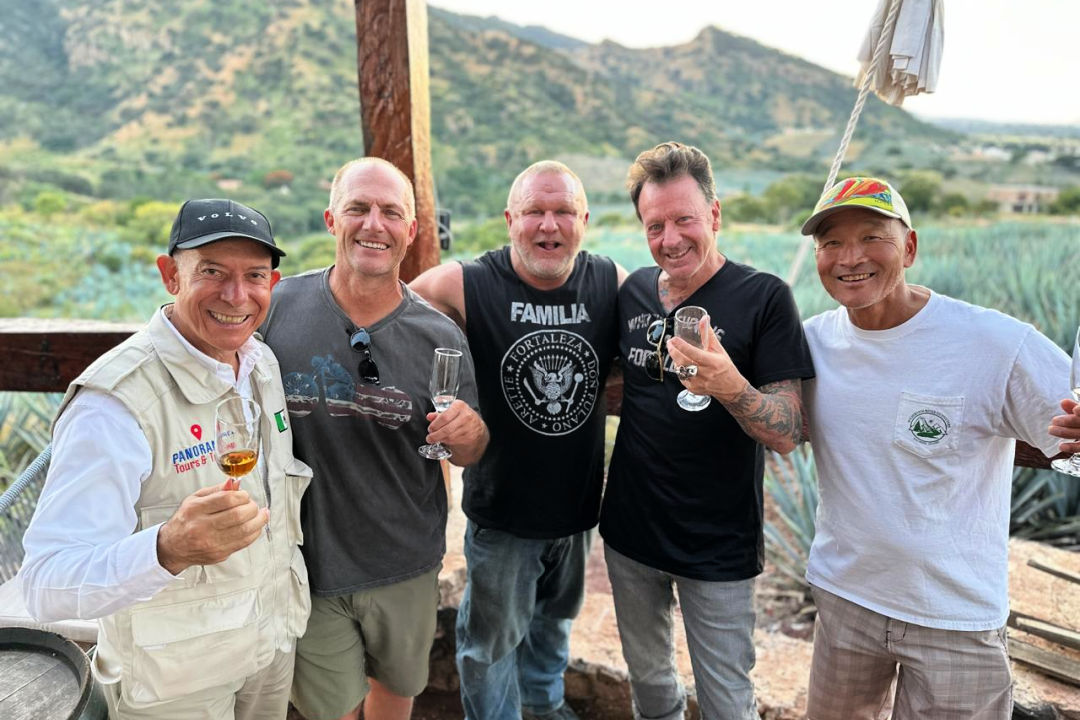
That’s exactly what happened during a guided experience with Panoramex Tours in the heart of Jalisco’s agave landscape.
Because tequila is not just a drink. It’s identity. It’s history. It’s economy. It’s art.
And as I discovered that day, it’s also a philosophy of life—hidden in plain sight inside a mural that most people walk right past.
The moment everything shifts: a mural that explains Mexico
Standing before us was a powerful piece of art: “The Seven Virtues of Tequila”, created by Martín de la Torre y Vega.
At first glance, it’s vibrant and symbolic—filled with figures, bubbles, and movement. But once an expert guide begins to decode it… it transforms into a narrative about Mexico itself.
This isn’t just art. It’s a story you read with your eyes.
At the top, Tlaloc watches over the land, reminding us that without rain, there is no agave. Below, Mayahuel represents fertility, life, and the sacred origins of the plant that makes tequila possible.
Right there, something becomes clear:
Tequila doesn’t begin in a distillery. It begins in the worldview of an entire culture.
1. Health: a misunderstood truth
The first virtue challenges a common assumption.
When properly crafted and consumed in moderation, tequila has long held a place in traditional Mexican practices—not just as a drink, but as something more nuanced.
Experts often point out that:
It can support digestion
It’s derived from agave compounds that behave differently than other sugars
It has been used historically in home remedies
But here’s what builds trust in this experience:
There’s no glorification—only education.
This is not about drinking more. It’s about understanding better.
Tequila Tastings in Guadalajara Jalisco Mexico
2. Work: the invisible effort in every bottle
If you’ve ever thought tequila was just another spirit… this part changes your perspective.
From agave field to glass:
Each agave plant takes 6 to 8 years to mature
Every harvest is done by hand
Cooking, fermentation, and distillation require precision and expertise
This is not mass speed production. This is patience turned into craft.
You don’t just drink tequila. You respect it.
3. Inspiration: the creative force behind a culture
Throughout history, tequila has inspired more than just celebration.
It has influenced:
Music
Literature
Visual arts
Not because it intoxicates… but because it connects.
During the experience, you begin to see it clearly:
Tequila is not just consumed. It fuels expression.
4. Success: from local spirit to global symbol
Tequila is one of Mexico’s greatest global success stories.
Today:
It is exported to over 120 countries
It stands among the most recognized spirits worldwide
It sustains thousands of jobs across Jalisco
The mural honors key industry figures like Francisco Javier Sauza Mora and Juan Beckmann Vidal, representing the evolution of tequila into an international powerhouse.
But the message is deeper:
Success didn’t happen overnight. It was built on vision, discipline, and pride in origin.
5. Joy: the universal language of tequila
This is where the emotional connection happens.
Because everyone has experienced—or witnessed—a moment where tequila plays a role:
Celebrations
Reunions
Spontaneous toasts
Tequila doesn’t create joy. It amplifies it.
That’s what makes it powerful. It’s not just a drink—it’s a social symbol.
6. Solidarity: the unseen network behind the industry
What most visitors never realize:
Tequila is community.
Behind every bottle, there are:
Farmers
Jimadores
Master distillers
Families whose livelihoods depend on this industry
This virtue reveals something essential:
Tequila doesn’t belong to a single brand. It belongs to a region and its people.
7. Justice: protecting authenticity
This is where tradition meets regulation.
Tequila is protected by a Denomination of Origin, meaning it can only be produced in specific regions of Mexico under strict standards.
This ensures:
Authenticity
Quality
Cultural preservation
Not everything labeled tequila truly is tequila.
And this protection is what safeguards centuries of heritage.
More than a tour: a shift in perspective
By the end of the explanation, something changes.
You’re no longer looking at a drink. You’re looking at a legacy.
That’s the difference between a typical tour and a curated experience.
A basic tour shows you places. A great one changes how you see them.
That’s what experiences designed by true local experts—like Panoramex Tours—are meant to do.
The Best Tequila Brands to Buy While in Mexico: Hidden Gems Not Found in the US
What to buy while in Mexico Tequila
Mexico, the birthplace of tequila, is a haven for aficionados of this iconic spirit. While many well-known brands are available worldwide, some exquisite tequilas remain exclusive to their homeland, offering a unique opportunity for travelers to discover and savor these hidden gems. If you’re planning a trip to Mexico and wish to explore the best tequilas not found in the US, here are some top recommendations and where to find them.
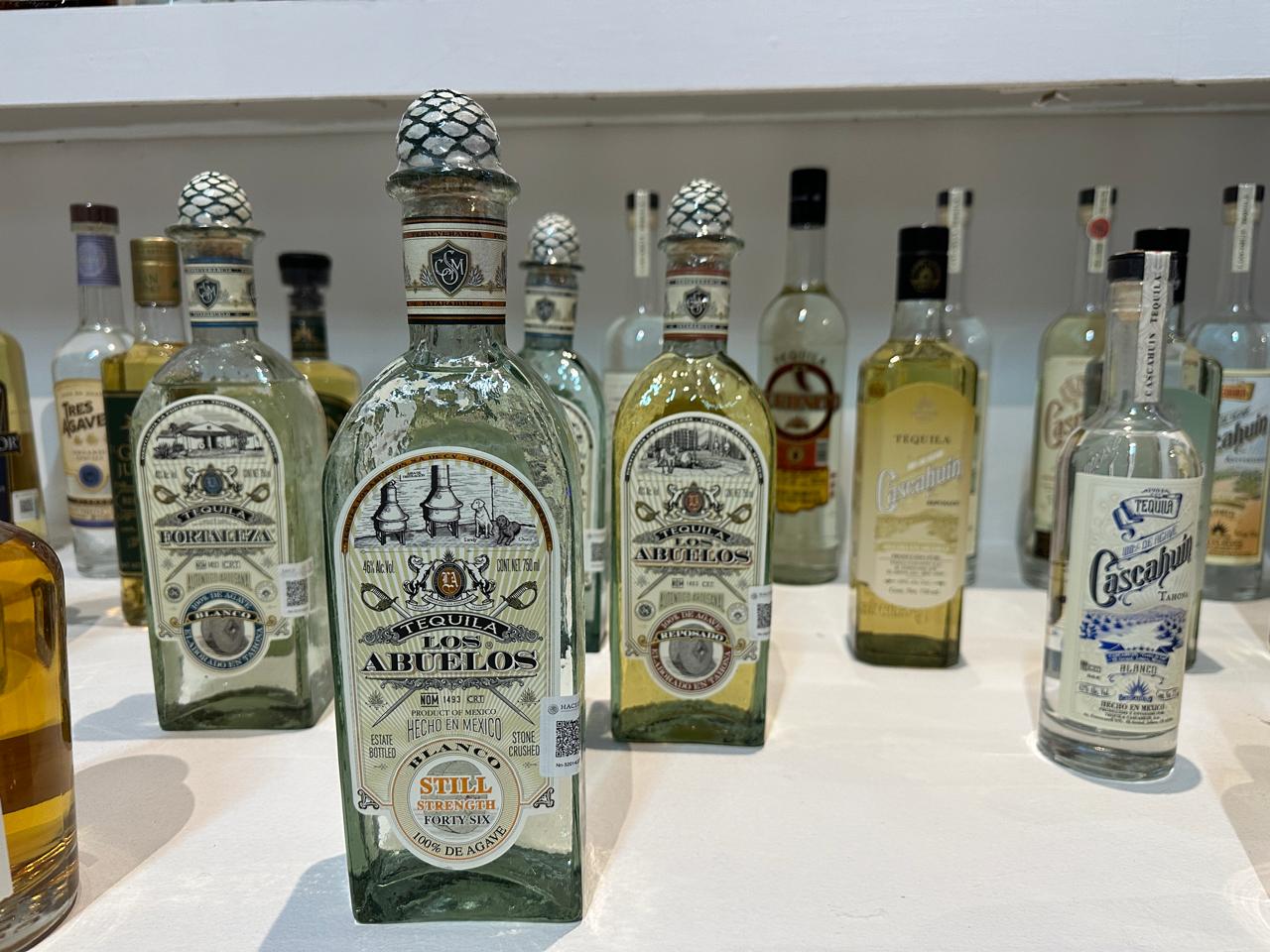
1. Tequila Los Abuelos
Distillery: La Fortaleza
Location: Tequila, Jalisco
About: Tequila Fortaleza, also known as Los Abuelos, is a family-owned brand with a rich heritage dating back to the 19th century. It is renowned for its artisanal production methods, including traditional stone grinding and copper pot distillation. Fortaleza offers a range of tequilas, including Blanco, Reposado, and Añejo, each with a distinct flavor profile that captures the essence of traditional tequila-making.
Where to Find: You can visit the La Fortaleza distillery in Tequila, Jalisco, for a guided tour and tastings with a reputable tour guide contact Tequila Local Experts in the bottom right corner. Additionally, Fortaleza tequilas can be found in select high-end liquor stores and specialty shops throughout Jalisco.
2. Tequila Ocho
Distillery: La Alteña
Location: Arandas, Jalisco
About: Tequila Ocho is a single-estate tequila, meaning each bottle comes from a specific agave field harvested in a particular year. This approach highlights the terroir and the unique characteristics of each field. Tequila Ocho is known for its complexity and depth of flavor, making it a favorite among tequila enthusiasts.
Where to Find: Visit the La Alteña distillery in Arandas, Jalisco, to experience the craftsmanship behind Tequila Ocho. You can also find it in boutique liquor stores and bars specializing in premium tequilas across Jalisco and other parts of Mexico.
About: Tequila ArteNOM Selección is a unique concept where each expression is curated from different distilleries, showcasing the diversity of tequila production in Jalisco. Each bottle highlights the expertise of a specific master distiller and the characteristics of their distillery’s terroir. The result is a collection of tequilas with distinct personalities and flavors.
Where to Find: ArteNOM Selección tequilas can be found in specialty liquor stores in Jalisco and other major cities in Mexico. Each bottle is a limited edition, so availability may vary.
4. Tequila G4
Distillery: El Pandillo
Location: Jesús María, Jalisco
About: Tequila G4 is produced by fourth-generation master distiller Felipe Camarena. Known for his innovative approach and commitment to quality, Camarena uses a unique blend of rainwater and spring water in the production process. G4 tequilas are celebrated for their purity, balance, and rich flavors.
Where to Find: Visit the El Pandillo distillery in Jesús María for a tour and tasting. G4 tequilas are also available in select liquor stores and premium bars throughout Jalisco.
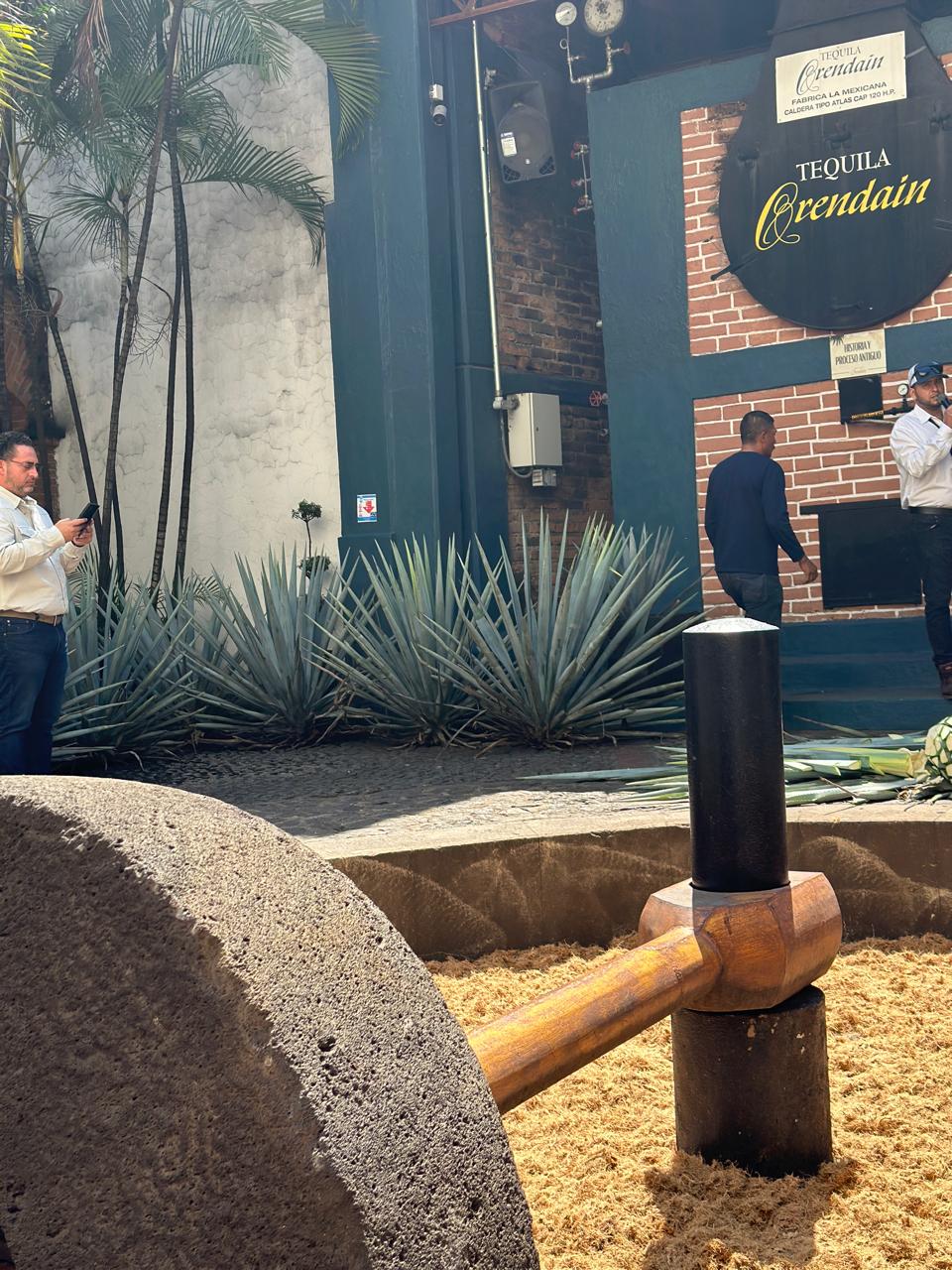
5. Tequila Gran Orendain
Distillery: Orendain
Location: Tequila, Jalisco
About: Tequila Grand Orendain is a small-batch tequila crafted using traditional methods and sustainable practices. Produced at the third Generation Orendain distillery, it is known for its authentic flavor and high-quality ingredients. Orendain Hill produces some of the best valles tequila agave plants that offer a true representation of the valley region of Jalisco, with earthy and vegetal notes.
Grand Orendain is a Tequila you must have in your bar
Where to Find: Schedule a customized tour with an English Speaking Tour Driver-Guide or you can find Gran Orendain tequilas at the Orendain distillery in Tequila and in specialized liquor stores throughout the region.
6. Tequila Don Fulano
Distillery: La Tequileña
Location: Tequila, Jalisco
About: Don Fulano is a family-run brand that emphasizes the importance of terroir and traditional production methods. The agave is grown in the highlands of Jalisco, and the tequila is distilled at the La Tequileña distillery. Don Fulano offers a range of expressions, each with a unique flavor profile that reflects the highland agave’s characteristics.
Where to Find: Visit La Tequileña distillery in Tequila, Jalisco, for a tour and tasting. Don Fulano tequilas are also available in premium liquor stores in Jalisco and other parts of Mexico.
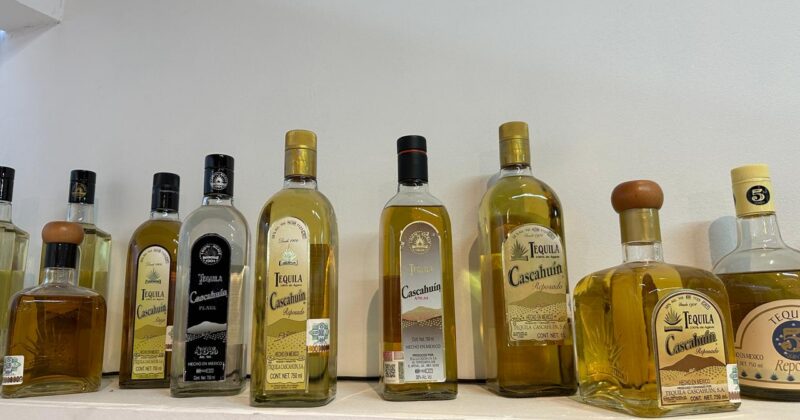
7. Tequila Cascahuin
Distillery: Cascahuin
Location: El Arenal, Jalisco
About: Cascahuin is a family-owned distillery that has been producing tequila since 1904. Known for its traditional methods and commitment to quality, Cascahuin tequilas are crafted with care and expertise. The brand offers a variety of expressions, including Blanco, Reposado, Añejo, and Extra Añejo.
Cascahuin Tequila to buy while in Mexico
Where to Find: You can visit the Cascahuin distillery in El Arenal for a comprehensive tour and tasting experience English speaking Tour Guide in Tequila. Cascahuin tequilas are also available in select liquor stores throughout Jalisco.
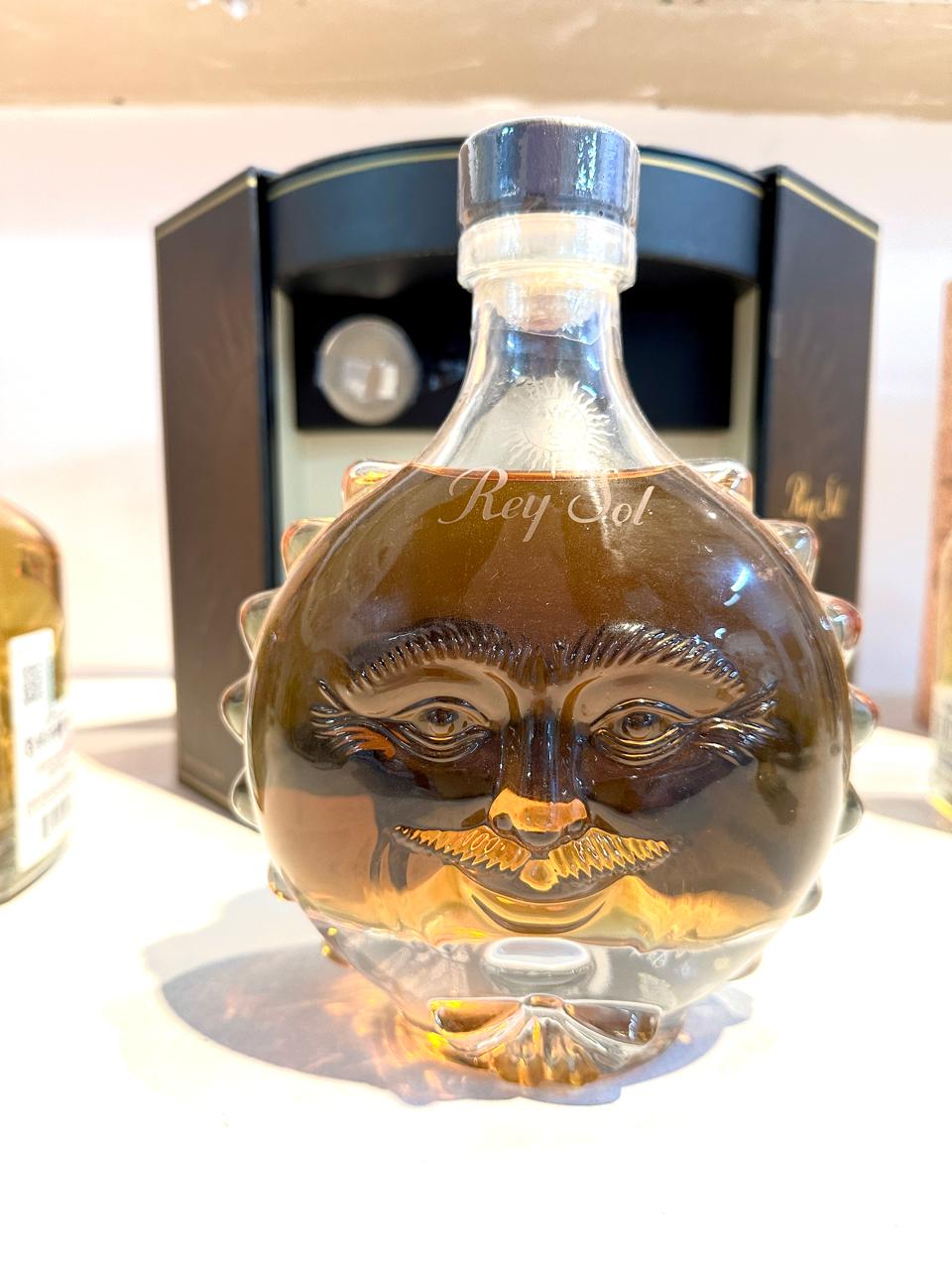
8. Tequila Rey Sol
Distillery: Casa San Matías
Location: Tepatitlán, Jalisco
About: Rey Sol is a luxurious, extra-aged tequila produced by Casa San Matías, one of the oldest distilleries in Mexico. This premium tequila is aged for six years in French oak barrels, resulting in a rich, complex flavor with notes of vanilla, caramel, and dried fruit. The distinctive bottle, designed by artist Sergio Bustamante, makes Rey Sol a collector’s item.
Tequila Rey Sol is a Tequila to Buy while in Mexico
Where to Find: Visit Casa San Matías in Tepatitlán for a tour and tasting with en English Speaking Tour Guide. Rey Sol is also available in high-end liquor stores and specialty shops in Jalisco and other parts of Mexico.
9. Tequila Siete Leguas
Distillery: Siete Leguas
Location: Atotonilco El Alto, Jalisco
About: Siete Leguas is a historic brand with a strong commitment to traditional production methods. The agave is cooked in brick ovens, and the juice is extracted using a traditional tahona (stone wheel). Siete Leguas tequilas are known for their authentic flavor and high quality, with expressions ranging from Blanco to Extra Añejo.
Tequila 7 Leguas to buy while in Mexico
Where to Find: You can visit the Siete Leguas distillery in Atotonilco El Alto for an immersive tour and tasting. Siete Leguas tequilas are also available in select liquor stores and premium bars throughout Jalisco.
10. Tequila Arette
Distillery: El Llano
Location: Tequila, Jalisco
About: Arette is produced by the Orendain family, one of the oldest tequila-producing families in Mexico. The brand is named after a famous Mexican horse that won a gold medal in the 1948 Olympics. Arette tequilas are crafted using traditional methods and offer a range of expressions with distinctive, well-balanced flavors.
Tequila Arette What to buy while in Mexico
Where to Find: Visit the El Llano distillery in Tequila, Jalisco, for a tour and tasting contact best rated English Speaking Tour Guides on Tripadvisor. Arette tequilas can also be found in specialized liquor stores throughout Jalisco.
Tips for Buying Tequila in Mexico
Visit Distilleries: Many distilleries offer tours that include tastings and the opportunity to purchase exclusive bottles directly from the source. This is a great way to learn about the production process and bring home a unique souvenir.
Specialty Liquor Stores: Look for boutique liquor stores and specialty shops in major cities like Guadalajara, Mexico City, and Tequila. These stores often carry rare and limited-edition tequilas not available elsewhere.
Markets and Fairs: Local markets and fairs can be a treasure trove for discovering unique tequilas. Vendors often sell artisanal products that reflect the region’s heritage and craftsmanship.
Ask for Recommendations: Don’t hesitate to ask locals for their recommendations. Bartenders, shop owners, and tequila enthusiasts can provide valuable insights and direct you to hidden gems.
Exploring the world of tequila with a local expert from a reputable company like Panoramex in Mexico offers an unparalleled opportunity to discover exceptional brands and flavors not available in the US. Whether you’re a seasoned tequila connoisseur or a curious traveler, these hidden gems promise to enrich your appreciation for this iconic Mexican spirit. So, pack your bags, set your sights on Jalisco, and prepare to embark on a tequila adventure like no other. ¡Salud!
Industrial vs Artisanal Tequila: The Difference That Defines the Experience
Talking about tequila means talking about Mexican identity, the agave landscape, and a tradition that has evolved over centuries. Yet behind the same denomination of origin, two very different worlds coexist—worlds that are rarely explained clearly to the consumer: industrial tequila and artisanal tequila. Both are legitimate, both can meet regulatory standards, but they are not equivalent in terms of sensory experience, production philosophy, or cultural value.
Understanding these differences does more than elevate appreciation—it fundamentally changes how tequila is consumed, purchased, and experienced.
Both industrial and artisanal tequila begin with the same essential ingredient: blue agave (Agave tequilana Weber, blue variety). This plant, native to Jalisco and a few authorized regions, is the heart of the spirit.
Experienced Tour Guides in Tequila Jalisco Mexico
The difference lies not in the raw material, but in how it is treated throughout the production process. That is where efficiency and expression begin to diverge.
Production Philosophy: Volume vs Identity
Industrial tequila operates under a global market logic. Its goal is to produce large volumes efficiently, consistently, and profitably. This requires accelerated, controlled, and standardized processes to ensure that every bottle tastes nearly identical, regardless of the batch.
Artisanal tequila follows a completely different philosophy. It aims to preserve traditional methods, respect the natural timing of the agave, and express unique characteristics of the terroir, the process, and the producer. Here, uniformity is not the goal—personality is.
One of the most critical stages in tequila production is cooking the agave, where starches are converted into fermentable sugars.
In industrial production, this is typically done in autoclaves—large stainless-steel ovens that use high-pressure steam. This method can complete the process in a matter of hours, enabling rapid production at scale.
Tequila Industrial VS Tequila Artesanal (Graph courtesy of Grisel Vargas)
In artisanal production, agave is cooked in traditional masonry ovens. These ovens operate slowly, often over 48 hours or more. This extended cooking time allows for a more even transformation and the development of deeper aromatic compounds, including rich caramelized and honeyed notes.
The result is a clear difference in the sensory profile. Industrial tequila tends to be more direct and linear, while artisanal tequila offers layered complexity that evolves on the palate.
Extraction: Maximum Efficiency vs Respect for the Fiber
After cooking, the agave must be crushed to extract its juices.
Industrial producers often use diffusers, a highly efficient technology that can extract sugars even from undercooked or immature agave. While this maximizes yield, it can also introduce less desirable compounds.
Artisanal producers rely on methods such as the tahona—a large volcanic stone wheel—or more traditional milling techniques. These methods are slower and less efficient in terms of volume, but they preserve the integrity of the agave and produce more balanced musts.
The distinction is fundamental: the diffuser extracts everything possible; the tahona extracts what matters most.
Fermentation: Absolute Control vs Natural Interaction
Fermentation is where sugars are converted into alcohol. In industrial settings, this process takes place in stainless-steel tanks using selected yeast strains under tightly controlled conditions. The goal is consistency and speed.
In artisanal tequila, fermentation may occur in wooden vats or even open-air containers, allowing interaction with wild yeasts present in the environment. This introduces variability, but also complexity.
At this stage, tequila begins to develop its character. Yeast, climate, and environment all influence the final aroma and flavor profile.
Distillation: Technical Precision vs Character Expression
Both industrial and artisanal tequilas typically undergo double distillation, but the equipment and approach can differ.
Large industrial distilleries use modern stills designed for efficiency and uniformity. Artisanal producers often use smaller copper stills, which allow for more hands-on control and subtle variations in the distillate.
The difference is not about technical capability, but about intent. Industrial production minimizes variation; artisanal production embraces it.
Additives: Standardization vs Purity
One of the least discussed but most important distinctions involves additives.
Regulations allow certain tequilas—especially aged expressions—to contain small amounts of additives such as caramel coloring, glycerin, or oak extract to adjust color, texture, and flavor. Industrial producers frequently use these tools to maintain a consistent profile.
Artisanal tequila generally avoids additives or uses them minimally. The goal is to let the flavor come entirely from the agave, fermentation, and maturation process.
This has a direct impact on the consumer experience. A tequila with additives may feel smoother or sweeter, but it may also lack authenticity.
Sensory Profile: Predictable vs Complex
Ultimately, everything translates into what is experienced in the glass.
Industrial tequila is typically clean, approachable, and predictable. It works well in cocktails and is easy to drink, but it rarely surprises.
Artisanal tequila can offer a much broader spectrum of aromas and flavors: herbal, mineral, floral, spicy, or earthy notes that reflect the agave and the environment. Each batch can tell a slightly different story.
This complexity is one of the reasons artisanal tequila has gained strong traction in the premium and luxury segments.
Representative Examples
To better understand these differences, it helps to look at specific producers.
Among large-scale industrial producers are brands like Jose Cuervo and Sauza, which have built global empires based on volume, consistency, and wide distribution. These companies rely on modern technologies to supply international markets efficiently.
On the artisanal side, producers such as Tequila Fortaleza and Siete Leguas have maintained traditional processes and a deep connection to tequila’s heritage. Their production is typically smaller, with a focus on quality over quantity.
It is important to note that this is not about labeling one as good and the other as bad. Each serves a purpose in the market. The issue arises when consumers lack the information needed to distinguish between them.
Cultural and Economic Impact
Industrial tequila has played a crucial role in positioning tequila as a global spirit. Without large-scale production, tequila would not have achieved its current international presence.
At the same time, artisanal tequila plays an equally important role in preserving traditional knowledge, craftsmanship, and cultural heritage.
From an economic perspective, the growth of artisanal tequila has created new opportunities for small producers, rural communities, and more specialized tourism experiences.
The Visitor Experience
For those visiting the tequila region, understanding these differences transforms the journey.
A visit to an industrial distillery can be impressive in scale and efficiency, showcasing the modern side of the industry. In contrast, a visit to an artisanal distillery is often more intimate, educational, and immersive.
Visitors do not just observe the process—they engage with it, understand it, and experience it firsthand. This distinction is crucial in today’s tourism landscape, where authenticity is increasingly valued over passive observation.
Conclusion: Two Paths, One Choice
Industrial and artisanal tequila are not adversaries, but they represent two distinct philosophies. One prioritizes efficiency and consistency; the other prioritizes identity and expression.
For the informed consumer, the choice goes beyond price or availability. It becomes a question of what kind of experience one wants to have. There are moments for accessible, functional tequila, and there are moments for tequila that invites reflection, exploration, and connection.
In the end, understanding these differences does more than refine taste—it connects the drinker to the land, the people, and the traditions that make tequila one of the most iconic spirits in the world.
The Family Origins
The story of the family behind The Horse begins with Félix López, who in 1870 acquired the hacienda and officially registered it as a tequila-producing estate. He renamed the property Hacienda San José del Refugio, a name that symbolized its grandeur.
Félix and Carmen
At the age of 45, Félix married 18-year-old Carmen Rosales, with whom he had two children: Aurelio and María de Jesús (Jesusita). Together, they modernized tequila production on the estate, building a factory that was in use until 1963. After Félix passed away in 1878, Carmen took over the hacienda with the help of her brother, Ambrosio Rosales, and his wife, Elisa Gómez Cuervo de Rosales. Ambrosio successfully managed the estate for years, teaching the business to Carmen’s son, Aurelio.
Aurelio
Aurelio eventually took control of the estate and named its tequila “Herradura.” During the Cristero Rebellion (1926-1929), a conflict between the Catholic Church and the Mexican government, Aurelio became a strong supporter of the Cristero movement. He provided refuge and resources to the rebels, earning him the nickname “El Cristero.” In 1927, the government began targeting Cristero sympathizers, and Aurelio had to flee the country, taking refuge in the Vatican for three years. Though he never returned to the estate, his legacy as a defender of the faith remained a key part of his story.
Don David
After Aurelio left, his cousin David Rosales took charge of the hacienda. At a time when mixed tequila (with added sugar) was becoming popular to cut costs, Don David insisted on keeping Herradura as a 100% agave tequila. In 1928, Tequila Herradura was officially registered, with the horseshoe as its iconic logo.
María de Jesús López Rosales
Known as “Chuy,” Aurelio’s sister returned to the hacienda after the Cristero conflict and dedicated her life to Amatitán. She never married and instead focused on social projects, such as building schools, the municipal palace, and renovating the local church. In 1958, she financed the construction of five wells that provided water to the community, a priceless gift.
Esther and Ernesto
The estate then passed to David’s sister, Esther de la Peña Rosales. Preoccupied with raising her three daughters, she handed the hacienda’s management to her extravagant brother Ernesto. Known for his lavish lifestyle, Ernesto drove the estate into financial trouble. Eventually, the family stepped in, and the estate was once again under the control of the three sisters.
The Three Sisters and Carlos Ugarte
The three De la Peña sisters retained most of the shares of Hacienda San José del Refugio, but only one, Gabriela, ended up working there. Gabriela hired her nephew, Carlos Ugarte, to manage the property, and he became a legend. Carlos was known for his hard work, sociable nature, and love for tequila. He improved the workers’ housing and was seen as a hero by the staff. His untimely death inspired a ballad in his honor, and he is still fondly remembered today.
Doña Gabriela de la Peña Rosales
If Hacienda San José del Refugio had a queen, it would be Doña Gabriela de la Peña Rosales. She was said to be strikingly beautiful and the hardest worker on the estate. She greeted the workers at breakfast, reviewed the accounts during meals, and handled sales in Guadalajara in the afternoons. Under her leadership, a modern distillery was built, while the old factory was preserved as a museum. Gabriela introduced Herradura Añejo in 1962 and presented Reposado to the world in 1974. Her generosity and hospitality were legendary, and her death was seen as a civic tragedy.
The Legacy Continues
Doña Gabriela’s sons, Guillermo and Pablo Romo de la Peña, ushered in a new era of expansion for Casa Herradura. In 1994, they launched El Jimador, which became the best-selling tequila in Mexico. In 1997, they added New Mix to their line, which became the top-selling ready-to-drink tequila beverage in the country. Although Brown-Forman acquired Casa Herradura in 2007, the Romo family remains closely tied to the hacienda, which is still a symbol of tradition and excellence in tequila production.
Ghost of Dona Felix at the Old Washhouse in Tequila
Tequila, a Pueblo Mágico in Jalisco, Mexico, is renowned for its rich cultural heritage. As one strolls through its cobblestone streets, it’s common to hear locals whispering tales of great charros, ancient deities, and hidden secrets. Among these stories is the legend of the washhouses, a place deeply intertwined with the town’s history and traditions.
Dona Felix at the Old Washhouse in Tequila
The Washhouses of Tequila
Constructed in the early 20th century as a solution to the town’s water scarcity, the washhouses of Tequila quickly became a central hub for the community. These structures were used by housewives to wash clothes and served as a gathering place to share joys and sorrows. The washhouses were designed to utilize the clean water from the Atizcua stream, filling 83 smooth stone basins where the women could scrub their clothes.
Over time, the washhouses evolved into a social meeting point. Housewives would congregate there, sharing stories and singing love songs. Despite being initially intended for women, it wasn’t long before romantic charros began frequenting the area to court them. This interaction gave rise to the famous Mexican saying, “men come to flirt, women come to wash¨.
Ghost Dona Felix in Tequila Jalisco Mexico Old Washhouse doing loundry
Today, although no longer used for their original purpose, the washhouses have become one of Tequila’s main tourist attractions. Their historical significance is complemented by the legends that surround them.
The Legend of Doña Félix
One of the most famous legends associated with the washhouses is that of Doña Félix. According to the story, Félix began washing clothes for others at the age of fifteen. Being short in stature, she used a small wooden stool to reach the washbasin. Over the years, young Félix grew into an elderly woman, known for always washing clothes at the same spot. She continued this routine until she passed away at the age of 85 from natural causes.
However, her story didn’t end with her death. After she passed away, the townspeople decided to keep her famous stool, ensuring that no one else would use it. Yet, to their astonishment, the stool would reappear at Félix’s washing spot every morning, despite their efforts to store it elsewhere. Believing that her spirit had returned to continue her lifelong task, the townspeople cemented the stool to the ground so that Doña Félix could continue washing clothes from beyond the grave.
Stool where Dona Felix used to stand to do loundry in Tequila Jalisco México
It is said that if you visit the washhouses of Tequila at night, you might still see and hear Doña Félix scrubbing clothes, her spirit dedicated to the task she performed in life.
Ghost of Dona Felix at the Old Washhouse in Tequila
Visiting the Washhouses
To visit the washhouses, start from main square. Walk straight for about a block until you reach Ramón Corona Street. Turn right and continue until you find Tabasco Street. Near the end of this street, you will find the washhouses.
Tequila Loundry washhouse jalisco Mexico
For those who love walking and exploring a Tequila Vilage with beautiful colonial buildings and cobblestone streets, it is recommended to make this journey on foot. However, due to the distance, you can also take a Tequila Tour from Guadalajara.
The Social Significance of the Washhouses
The washhouses were more than just a place to clean clothes; they were a vital part of the social fabric of Tequila. Women from all over the town gathered there, creating a sense of community and solidarity. The act of washing clothes together became a ritual where they shared stories, exchanged advice, and supported each other through life’s challenges.
The washhouses were also a place where important news and gossip were spread. In a time before modern communication, these gatherings served as a way to disseminate information quickly throughout the community. The women would discuss everything from personal matters to town politics, making the washhouses a hub of information and social interaction.
The Courting Rituals
The presence of the charros added an element of romance to the washhouses. These dashing horsemen would come to flirt with the women, often serenading them with songs and poems. This interaction was a significant part of the courting rituals of the time. The washhouses became a backdrop for many love stories, where young men and women met and fell in love.
The phrase “men come to flirt, women come to wash” encapsulates this dynamic. It highlights how the washhouses served as a unique social space where traditional gender roles were both reinforced and gently subverted through the playful and romantic interactions that took place there.
The Transformation into a Tourist Attraction
As times changed and modern conveniences made washhouses obsolete, the physical structures remained as a testament to Tequila’s history. Recognizing their historical and cultural value, the town preserved these washhouses as a tourist attraction. Today, they stand as a reminder of the town’s past, drawing visitors who are eager to learn about Tequila’s heritage and the stories that shaped it.
Tourists visiting the washhouses can imagine the lively gatherings that once took place there. The site offers a tangible connection to the past, allowing visitors to step back in time and experience a slice of daily life from a bygone era.
The Ghostly Presence of Doña Félix
The folk tale of Doña Félix adds a mystical element to the washhouses. Her story has captivated the imagination of locals and visitors alike. The idea that her spirit continues to wash clothes long after her death speaks to the deep connection she had with her work and the washhouses themselves.
Visitors who come to the washhouses at night often report feeling a chill in the air or hearing faint, ghostly sounds. Some claim to have seen a spectral figure bent over a washbasin, scrubbing diligently. These experiences add to the allure of the site, making it a popular destination for those interested in the paranormal.
Preserving the Legend
The townspeople of Tequila take pride in their legends and work to preserve them for future generations. The story of Doña Félix is not just a ghost tale but a part of the town’s cultural identity. By sharing this story, they keep the memory of Doña Félix alive and honor the contributions of the women who made the washhouses a vibrant social space.
Local guides often recount the legend to visitors, ensuring that the tale of Doña Félix remains a part of Tequila’s living history. This storytelling tradition helps maintain the town’s cultural heritage, bridging the past and present.
The Cultural Impact
The washhouses and the legend of Doña Félix illustrate the importance of community and tradition in Tequila. They highlight how everyday activities can become deeply significant cultural practices. The washhouses were not just about washing clothes; they were about fostering connections, sharing experiences, and building a sense of community.
The preservation of the washhouses as a tourist attraction and the perpetuation of the legend of Doña Félix show how Tequila values its history. These elements contribute to the town’s identity as a Pueblo Mágico, a place where the past and present coexist in a unique and meaningful way.
The legend of the washhouses of Tequila and the ghost of Doña Félix is a captivating tale that reflects the town’s rich cultural heritage. The washhouses, once a vital social hub, now stand as a testament to Tequila’s history and traditions. The story of Doña Félix, with her enduring spirit, adds a mystical element that continues to intrigue and attract visitors.
As you walk through the streets of Tequila, take a moment to visit the washhouses and reflect on the stories they hold. Feel the presence of the past, the echo of laughter, and the whispers of old songs. And if you listen closely, you might just hear the ghostly scrubbing of Doña Félix, a reminder of the enduring spirit of Tequila and its people.
In the picturesque Magical Town of Tequila, Jalisco, a folk story has been passed down through generations, Whispered among the workers and local inhabitants. It is the story of a Mythical Beautiful Woman and how Juan the Jimador fell in love with her. A story as intriguing as it is terrifying.
Juan the Jimador – Traditions of Tequila Jalisco México
The Workers’ Routine
Every morning, the workers of the tequila factories made their way to their duties, passing along the path that led them to the washhouses and the scales. This path was surrounded by agaves, those noble hearts of the land that gave life to tequila. The air was always filled with the sweet and pungent aroma of cooked agave, mixed with the morning freshness of the countryside.
It was on this path that the workers began to tell stories about an incredibly beautiful woman who appeared before them. She was always a few meters ahead, walking with grace and elegance. She had a slender body and a figure that took anyone’s breath away. However, no matter how hard they tried to catch up to her, they never could. It was as if the beautiful woman was an illusion that faded with each step they took.
Folk Story of the beautiful woman (Siguanaba) told in Tequila Jalisco Mexico
The Brothers’ Encounter
One morning, two brothers, Juan and Pedro, were on their way to the factory. Juan, the older one, was a strong and brave young man, while Pedro, the younger one, was more cautious and thoughtful. Upon reaching the path by the washhouses, they saw the beautiful woman walking ahead of them. Juan, fascinated by her figure, decided that this morning would be different. “I have to know who she is,” he said determinedly. “With a body like that, she must be a beautiful woman.”
Pedro, worried, tried to dissuade him. “Brother, we’ve heard stories about her. No one has been able to catch up to her, and those who try are never the same.”
But Juan paid no attention to Pedro’s warnings. With firm resolve, he began to run after the woman. Pedro followed him, though at a safe distance, fearing the worst.
Leyenda de la Mujer Bonita en Tequila Jalisco México
Juan The Jimador Folk Story
The Mystery Unveiled
The woman walked calmly, unhurried, as if she was waiting for someone to follow her. Juan ran with all his might, and just at a bend in the path, he caught up to her. His heart was pounding, both from the effort and from the excitement of finally meeting the enigmatic woman.
But when he reached her and stood in front of her, his heart stopped for a moment. What he saw left him paralyzed. The woman, with her perfect body, slowly turned her face towards him, revealing a face that was not human. She had the face of a horse, a grotesque and diabolical image that made Juan scream in horror.
Pedro, who had arrived a few seconds later, saw his brother fall to the ground, fainting. He ran to him and tried to revive him, but Juan was unresponsive. With effort, Pedro carried his brother back to the town, where he was attended to by a local doctor.
The Consequences
Juan was in a coma for several days. When he finally woke up, he was no longer the same. He had lost part of his mental faculties, and his eyes, once full of life and determination, were now empty and vacant. He muttered incoherently about the woman with the horse’s face and never again was the brave young man Pedro had known.
Juan’s story became a warning for all the town’s workers. Many others had tried to catch up to the beautiful woman and had suffered similar fates. The legend grew, and over time, it became part of Tequila’s folklore. Parents told the story to their children, and the elders remembered those who had fallen victim to the beautiful woman.
A New Beginning
Pedro, for his part, became a wise and respected man in the town. He always remembered his brother and the lesson he had learned from that experience. He devoted himself to caring for Juan and sharing the story with anyone who would listen, hoping that no one else would suffer the same fate.
One day, while walking down the same path he had traveled with his brother, Pedro stopped at the bend where Juan had encountered the woman. He closed his eyes and offered a prayer, not only for his brother but for all those who had been victims of the mysterious figure.
From then on, the inhabitants of Tequila continued to see the beautiful woman, but no one else tried to catch up to her. The legend became part of the town’s identity, a mix of beauty and terror that reflected Tequila’s cultural richness and mystique.
The Legacy of the Legend (Siguanaba)
As the years passed, the legend of the beautiful woman was told and retold in many forms. Some said she was a spirit protecting the agaves, guarding the land and its wealth. Others believed she was a warning for greedy men who only saw outward beauty without understanding the true value of things.
Happy Holloween
But for Pedro, the legend would always be a reminder of his brother and the importance of prudence and wisdom. On quiet nights, when the wind whispered through the agaves, one could hear the story of the beautiful woman, a story that had left an indelible mark on the heart of Tequila.
And so, the legend endures, a testament to the traditions and beliefs of a town that celebrates life and mystery with equal fervor. A story that, like tequila itself, is strong and full of character, leaving a lasting impression on all who hear it.